


Construction workers: As informal as ignored

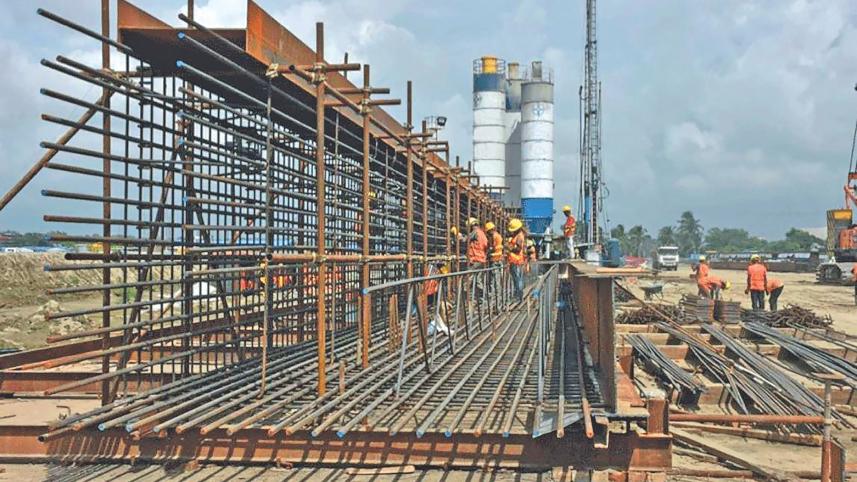
Though the ongoing shutdown has put informal workers in the construction sector in a tight spot as they are largely dependent on daily wages, the ministry concerned has failed to act promptly to address their hardships.
Only on April 12, the 18th day of the shutdown, the Ministry of Labour and Employment formed a crisis management committee to address food security for day labourers. It is now compiling a database of construction workers and rickshaw and van pullers so they receive the government's food and financial support.
 For all latest news, follow The Daily Star's Google News channel.
 Till April 19, the committee prepared a list of 40,000 workers -- 15,000 of whom are from the construction sector, according to the committee's convenor, Mohammad Aminul Haque, director of the Divisional Labour Office.
There is no exact count of construction sector workers or indeed, of informal workers, in the country.
Of these informal workers, around 24.51 lakh work in building construction; 5.75 lakh in specialised construction activities; 14,000 in plumbing, water and sewerage connection; 1.02 lakh in electricity connection and electrical equipment installation; and 7.7 lakh in furniture, according to the Labour Force Survey 2016-17.
Not just the ministry, but labour associations, which are vocal about the rights of day labourers, have reportedly failed to support them in their time of need.
"I don't know how long this shutdown will continue. All my savings are finished," said day labourer Mokhlesur Rahman, a father of three, who left Dhaka for his village in Baufal of Patuakhali immediately after the government order was declared.
Ayub Ali, an interior decoration contractor, was working on the decoration of a shop at Pir Yemeni Market. After the market was closed on March 21, he too left for his home in Dogachi village of Pabna. He is now looking for a microcredit loan to support his family.
"Back in the village, I worked as a labourer at a local brick kiln for around 10 days in order to support my family. But it was also then shut down," said Ayub, adding 10 workers under his supervision are also going through hard times.
Toju Mia, a plumber in the capital's Gendaria, said he last worked at an under-construction building in the Sutrapur area in mid-March. "I sought some time from my landlord to pay rent. But I still don't know how I will pay him," he said.
Habibur Rahman Shiraz, chairman of the Bangladesh Institute of Labour Studies (BILS), said the prime minister has issued strict directions on providing support to day labourers during the shutdown enforced to slow down coronavirus transmission.
"But there might have been some problems in executing this direction at the field level."
The Directorate of Labour, a regulatory agency under the labour ministry, has no database of construction workers. In contrast, the fisheries and livestock departments, for example, have their own lists of informal workers in their respective sectors.
Shiraz, also labour secretary of the ruling Awami League, said the Jatiya Sramik League has a list of workers who are being given support accordingly. Asked about non-partisan workers and those affiliated with other political parties, he said they are providing support to all day labourers, including construction workers.
However, he acknowledged, preparing a list of day labourers in the construction sector is slightly problematic as they do not stay in the same place for a long time.
AKM Mizanur Rahman, director general of the Directorate of Labour, said they do not have any separate relief programmes for informal workers, such as those working in the construction sector.
"The government is centrally giving aid, we're assisting them," he said, confirming the directorate does not have a database of informal workers.
When asked about the delayed response, Mizanur cited the unprecedented crisis as reason for the time needed in responding to the labourers' needs.
The Daily Star tried to reach the State Minister for Labour and Employment, Begum Monnujan Sufian, over phone but she did not respond to these correspondents' calls or text message.
ASSOCIATIONS, TOO, UNHELPFUL
"We are needed only for May Day programmes and political rallies. They use us. No leaders have called to know how we're passing our days," said Sobhan Mia, a construction worker from Baufal of Patuakhali.
"We're drowning in debt, but no one is there to protect us."
According to construction workers' leaders, there are around 350 associations that supposedly look after the welfare of informal workers in the sector. But they too are not playing a noticeable role in addressing the workers' plight, so far.
Osman Ghani, president of Imarat Nirman Sramik Union Bangladesh, said around 1.8 lakh construction workers including masons, labourers, plumbers, electricians, and carpenters are registered to the organisation.
"On April 19, I submitted a list of 2,000 construction workers to the DC office for aid," he said. He added that his organisation does not have enough funding to address these labourers' situation.
Sheikh Mohammad Nurul Haque, general secretary of Bangladesh Nirman Sramik League, said the organisation has around 40 lakh members across the country.
"We are doing these services voluntarily as we have no financial capital centrally. We have to depend on government support and aid to support our members," he told The Daily Star.
As a part of arranging such support, Nurul said that they have asked their district committee members to apply to the local administration with the phone number and NID details of their members, so that these labourers can get the relief arranged by the government for all those in need.
Comments