




Uncertain politics, unsettling economy
Bangladesh's much-anticipated parliamentary elections are scheduled for next February. And they could not have come at a more fraught time for the country. More than 16 months have passed since the interim administration took office, and unofficial estimates indicate a downward trend in the government's approval ratings.
7 December 2025, 07:00 AM

Can Mamdani deliver on the issues that secured his win?
This was the first election since Trump took office in January that provided an opportunity to gauge voters' current political mood.
10 November 2025, 05:00 AM
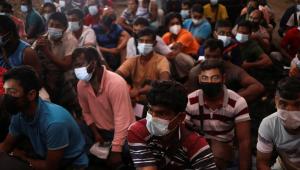
Japan has opened its door for Bangladesh, let’s not ruin it
Bangladesh plans to send one lakh people to Japan over the next five years.
25 October 2025, 04:00 AM
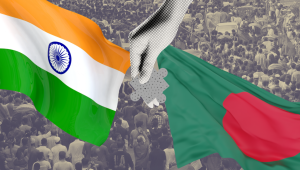
Will the upcoming election stabilise Bangladesh-India relations?
There are several areas where Bangladesh and India can collaborate.
14 October 2025, 04:00 AM

Remembering Salahuddin Ahmed, a mentor and friend
Salahuddin Ahmed had a career that only a few can imagine.
28 September 2025, 06:39 AM
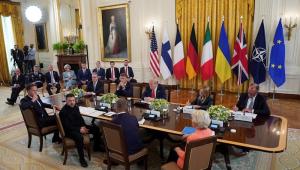
AN OPEN DIALOGUE / Ukraine’s peace lies in compromise
Before Biden, various US presidents had respected an unwritten understanding between Russia and the West that Ukraine would not be invited to join NATO.
25 August 2025, 05:00 AM
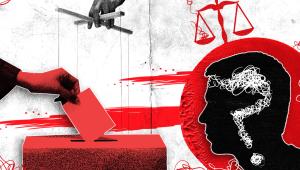
AN OPEN DIALOGUE / Why opinion polls still matter
Opinion polls are, in a sense, a necessary evil. They can often incur the wrath of those in power, or of individuals whose views are not corroborated by, or match, the information provided by a survey.
10 August 2025, 04:00 AM
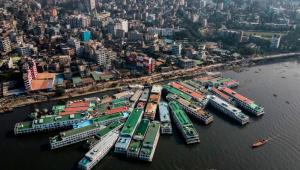
Bangladesh in the age of global economic flux
Any casual observer of the recent global scenario can see a constant shift in global crosscurrents.
27 July 2025, 06:00 AM
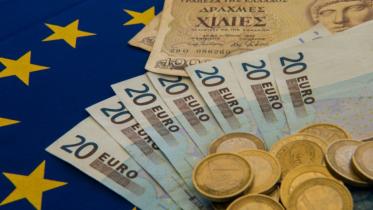
Can the Greek Referendum offer any lessons?
In a historical referendum on July 5, 2015, the Greek voters overwhelmingly sided with the current government in its debt negotiations with its European partners.
9 July 2015, 18:00 PM
“Distressed” RMG Industries
Areas where further progress was needed are labour organisation in EPZ, negative publicity regarding harassment of NGOs and labour unions, and lack of data and transparency on factory inspections.
1 July 2015, 18:00 PM
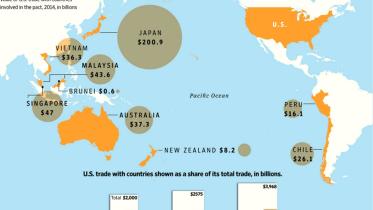
Trans-Pacific Partnership Treaty and Bangladesh
The Trans-Pacific Partnership (TPP) treaty currently under negotiation could potentially affect Bangladesh's economy in the near future, although at this point it is not clear how large the impact might be since many of the details are still under wrap.
14 June 2015, 18:00 PM

Love, Again
Ajanta has not seen her mother in ten years. During her last visit to Dhaka, Amma had suggested that Ajanta should consider getting married again.
5 June 2015, 18:00 PM

Why inequality still matters
In order to reduce inequality in Bangladesh, much more needs to be done to improve access to employment, health and education for the bottom half of the population.
17 May 2015, 18:00 PM
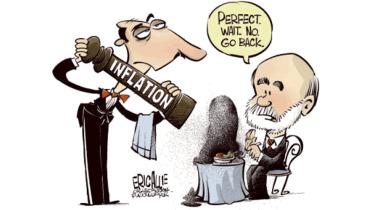
Why do all developed countries want more inflation?
A recent headline in The Daily Star announced that the inflation rate in Bangladesh rose by 0.13 percent in March as compared to
18 April 2015, 18:00 PM
How the currency War might affect Bangladesh
A global currency war is going on without much fanfare or a formal declaration of war. All major economies, including the Eurozone,
24 March 2015, 18:00 PM

Syed Mujtaba Ali as a Rebel
Most people, including his close associates, don't see Syed Mujtaba Ali as a rebel. He had all the traits of a regular guy: a family, love for his siblings, dedication to parents, and commitment to one's roots.
6 March 2015, 18:00 PM
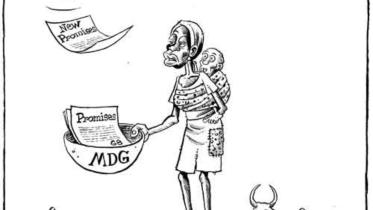
Why poverty action plans don't work
CAN we really banish poverty in Bangladesh by the year 2030? I do not question the loftiness of the goal of eradicating poverty or the sincerity of policy makers and the economists. However, what gives me reasons for concern is the lack of evidence on the efficacy of various anti-poverty programmes, and the limited amount of time left to meet the target, i.e., only fifteen years remaining. Complicating the scenario is the evidence from research that the mainstay of our economic programmes to eradicate poverty in the last two decades, viz., employment generation in the garments sector and microcredit expansion, may not deliver the goods for those who live in poverty.
15 February 2015, 18:00 PM