


Bangladesh deserves better universities — Not excuses
The true purpose of a university is to pursue knowledge, cultivate critical thinking, and serve society. Rankings only have meaning when they strengthen these intellectual and humanistic values — not when they distort them.
DS+

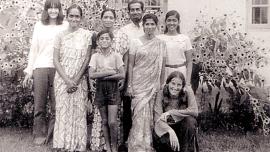
A British witness to Bangladesh genocide: Val Harding’s 1971 story
In April 1971, at the age of 24, Val Harding was volunteering as a nurse at a hospital in Kathmandu, Nepal, when she first heard of the atrocities on March 25 in Dhaka and the fight for the Liberation of Bangladesh.
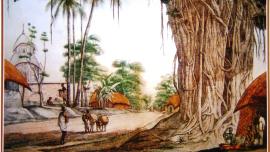
Early North Bengal: A (re-)creation and a lone journey
Naturally, ENB, which was mentioned as Puṇḍravardhana-bhukti in the Gupta epigraphs, remained mostly understudied.

A 2,000-year journey through Bengal’s architecture
Architecture is never neutral, it is the most visible, permanent, and symbolic tool through which politics announces itself.
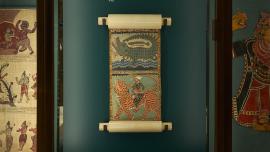
Faith, art, and livelihood in patachitra
Patachitra is considered one of the oldest Bengali forms of audio-visual storytelling.
Bangladesh deserves better universities — Not excuses
The true purpose of a university is to pursue knowledge, cultivate critical thinking, and serve society. Rankings only have meaning when they strengthen these intellectual and humanistic values — not when they distort them.
DS+
A 2,000-year journey through Bengal’s architecture
Architecture is never neutral, it is the most visible, permanent, and symbolic tool through which politics announces itself.
DS+

Rethinking Bangladesh–India transit relations: The question of reciprocity
If India’s new transit regime prioritises its internal market over regional commitments, Bangladesh must adopt a similarly clear-eyed approach
DS+

Gold prices and the hidden economy of weddings
Behind the glitter of bridal jewellery lies an invisible economy, one that thrives on social pressure, consumerism, and gender inequality.
DS+

Forgotten Currents / Bengal’s Ties to the Straits World
Medieval Bengal’s links to the Straits world, a narrow stretch of water connecting to Southeast Asia and beyond, are overlooked. This world saw not only ocean-going vessels, but also coastal and localised traffic which, like riverine transport, has gone largely unrecorded.
DS+
In Search of Premodern Bengal’s Literary Treasures
With the passing of Professor Tony K. Stewart, Gertrude Conaway Vanderbilt Chair in Humanities Emeritus, the field of South Asian religions, and more specifically, premodern Bengali literature, has lost one of its leading lights.
Bots
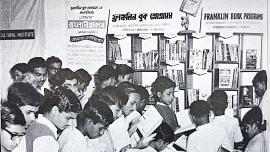
The untold story of Franklin Book Dhaka: In the shadow of the cold war
The Cold War was a war of armaments and ideologies—but it was also a war of words, fought in classrooms, libraries, and on the printed page.
Bots

What we learn when we truly see our parents
Parents are not mythical beings, they are ordinary people with ordinary lives and extra ordinary love for us.
DS+

Earthquakes, overthinking, and the Hamlet within us
Hamlet’s tragedy lies not in his flaws, but in his waiting.
DS+

We are not angry for justice — we are angry to feel better
It is an already conditioned culture that prefers reactions over reflections, mere spectacle over humility.
DS+

The places we go when we want to disappear
Escapism is one of the most ordinary forms of survival we’ve invented.
DS+
Faith, art, and livelihood in patachitra
Patachitra is considered one of the oldest Bengali forms of audio-visual storytelling.
DS+

We don’t need more data - we need to understand it
The question is no longer about data scarcity, but about data governance: who holds it, who uses it, and to what end.
DS+
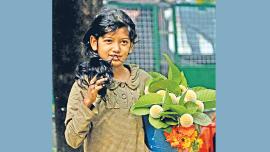
Dhaka’s forgotten girls: Living without safety, identity or rights
One of the less visible but most damaging barriers is the absence of legal identity.
DS+

Why is secondary education becoming unaffordable?
The soaring costs are turning secondary education into a secondary priority, overshadowed by the daily struggle for survival.
DS+

The hands that clean, the Harijans we refuse to see
Our stomachs often remain empty—not because we do not work hard, but because life is unfair
DS+
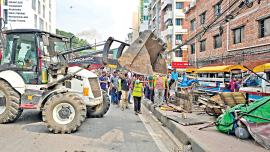
Who owns Dhaka’s streets?
The informal economy is not a leftover of "under-development" but continues to operate across advanced societies.
DS+
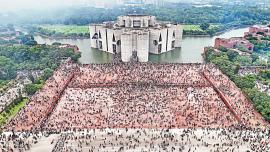
Red July, one year on: The fight for unity, dignity, and justice must continue
It has been a year since Bangladesh freed itself from the murderous clutches of a tyrannical regime that had made corruption the rule of business, extreme arrogance of power the norm, and brutal repression its operational style.
DS+
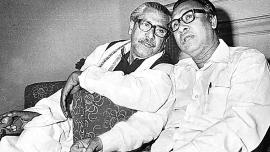
Our finest representative of liberal politics
I did not personally know Tajuddin Ahmad, but he was a contemporary of ours, and the politics he practised was within the Awami League—though there were different strands within the party.
DS+
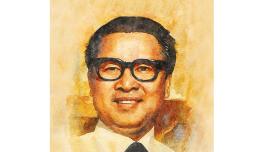
Remembering Tajuddin Bhai
I first met Tajuddin Ahmad—or Tajuddin Bhai, as I knew him—in the 1960s, during the pre-Liberation period. After I joined the Awami League, Bangabandhu told me to meet Tajuddin Ahmad, as he would answer all my questions on politics and the party, and that he possessed deep knowledge of both politics and people.
DS+
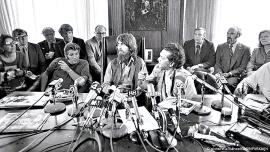
Global Chords of Freedom
The Liberation War of Bangladesh in 1971 was not just a struggle fought on the battlefields, but a humanitarian crisis that captured the world’s attention.
DS+