


Remembering Matiul Islam: A young man who died at 95

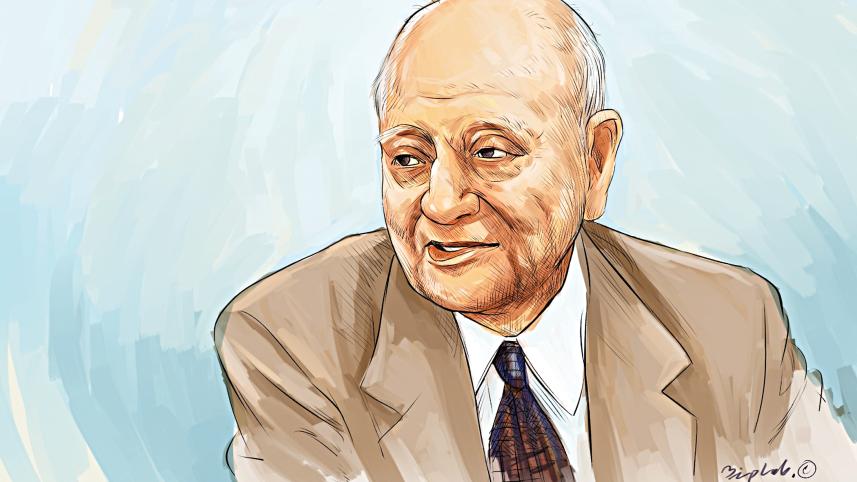
Bangladesh has lost one of its most enduring builders. M Matiul Islam, the country's first finance secretary and a pioneering figure in the nation's economic architecture, passed away on November 20 at the age of 95. Those who observed him in person and his career often remarked that he remained a young man in spirit until his final days, defined by a tireless work ethic, sharp clarity of thought and an undiminished appetite for new ideas and know-how. His life reminds us that intellectual youth is not measured in years but in curiosity, discipline and a willingness to keep evolving.
Matiul Islam's professional journey was marked by an unusual combination of technical mastery and administrative depth. Trained as a chartered accountant, he entered public service with a level of financial literacy that is rare in the bureaucracy. His early postings in the Pakistan Civil Service allowed him to work at the intersection of finance, governance and industry. By the late 1960s, he had already built a reputation as someone who could simplify complex issues, navigate institutional challenges and deliver results without drama.
 For all latest news, follow The Daily Star's Google News channel.
 During 1968-69, while serving as secretary of the Ministry of Industries and Commerce, he was simultaneously appointed as acting deputy commissioner of Khulna. Managing an entire district alongside a critical economic ministry would have been demanding even for a seasoned administrator. Yet he approached the responsibility with a systematic, almost youthful eagerness. His work in Khulna strengthened local governance, improved coordination across agencies and helped drive industrial momentum when the region was undergoing rapid change.
His most consequential contribution came after independence, when he served as the first finance secretary of Bangladesh. The newborn nation needed more than routine management. It required institution-building from scratch. Matiul Islam played a pivotal role in shaping the national budget process, designing expenditure controls, formalising treasury operations and helping establish the early frameworks for monetary and fiscal governance. Bangladesh's economic institutions were fragile in those formative years, yet his disciplined stewardship brought order, predictability and professionalism to the system.
Beyond public service, Matiul Islam demonstrated a remarkable entrepreneurial instinct that further reflected his youthful mindset. After his government tenure, he ventured into business and industry with the same analytical rigour he had brought to the civil service. His leadership roles across various private sector entities showed a commitment to creating value, strengthening corporate governance and promoting ethical business practices.
Even as he moved across sectors, he remained consistent in his approach: clarity, discipline and logic were at the centre of his working style. He valued punctuality, respected process and upheld transparency in decision-making. These qualities earned him the reputation of being decisive without being loud, firm without being rigid and detail-oriented without losing sight of the larger purpose.
What stands out in reflecting on his long life is the sense of youthful resolve he carried throughout his career. Whether he was restructuring public finance, managing district administration, steering an industry or setting up business ventures, he brought a freshness of mind and an eagerness to improve processes. It is this spirit that made him, in many ways, a young man who simply happened to live 95 years.
I came across Mr Islam in the early 1990s. I remained an admirer of him for his steadfastness and eagerness to learn. Our relationship became close when I moved to Citibank at the MCCI building. Mr Islam was the chairman of IIDFC, an NBFI situated in the same building. Even if I were a little early to the office, I could surprisingly find him ahead in the queue for the elevator, and it was almost a regular picture. I also had the opportunity to work with him on the board of one of his capital market subsidiaries. He had a challenging mind and the ability to go beyond.
As Bangladesh continues to evolve, it stands on the foundations built by individuals like Matiul Islam. His legacy endures not because he sought recognition, but because he shaped the systems that would continue to serve the nation.
The writer is a banker and an economic analyst
Comments