


Default loans reveal true state of banking sector: Debapriya
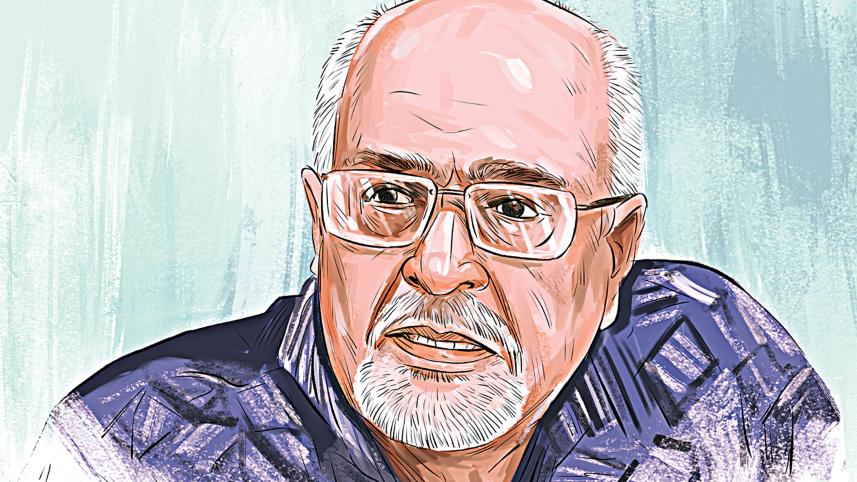
Eminent economist Debapriya Bhattacharya yesterday said the amount of non-performing loans (NPLs) or default loans exposes the real picture of the banking sector.
"In the past, it had been concealed. Shortfalls in provisions and deficits in reserves have also been revealed.
 For all latest news, follow The Daily Star's Google News channel.
 "It is not just that NPLs have increased; capital shortfalls have also come to light," said Bhattacharya, who is a distinguished fellow of the Centre for Policy Dialogue.
He made the comment at the Economic Reporters' Forum (ERF) auditorium while he spoke as the chief guest at the launch of a book, titled "Arthanaitik Sangbadikata" (Economic Journalism), written by economists, experts and economic and business journalists.
The book contains articles on 21 topics ranging from challenges and the way forward after Bangladesh's LDC graduation, inflation, reporting on macroeconomic issues, the budget and reporting related to the budget, financial crime and reporting on the banking sector.
Edited by Ziaur Rahman, editor of the Bangla news portal Arthosuchak, Chandrabati Academy published the book, aiming to inform students of journalism and business journalists on major issues related to the economy and business.
Replying to a question, Debapriya said, "In truth, you did not know your body had so many illnesses. Now that the illnesses have been identified, you are feeling alarmed. I believe there is no reason for distress simply because these internal problems have been exposed."
"The question is: what steps has the current government taken during this period to address these issues?" he said.
"Other than merging the five banks, making these accounts more compliant, appointing administrators in different institutions, and reverting the Banking Companies Act to its previous form — what else has been done? We want to see what has been achieved in terms of good governance."
Debapriya, who headed a panel on the white paper on the state of Bangladesh's economy, said the bureaucracy provided strong support to the previous government in carrying out its misappropriations.
"If we have to name two or three individuals, the head of the central bank would be among the key accused. Within this entire process, his wrongdoing is particularly serious because it was his responsibility to ensure accountability, transparency and related matters," he said.
At the event, he lauded the role of economic reporters for uncovering issues, including loan scams during the tenure of the Awami League government ousted in August last year. Now, they can play a significant role in accelerating efforts to bring transparency and carry out reforms.
Responding to another question on the interim government's move to sign deals with foreign investors for the operation of two terminals at the Chattogram port, he said, despite the slow pace of reforms in other areas, the government moved fast here.
"In one area the government undertook no reforms at all, yet in another area it completed such a major task within 13 days," he said. "I was stunned. This means that if you want to, you can. Then why was it not done elsewhere?"
This means that somewhere there remains a lack of political intent, a lack of incentives, he said.
If good work is not done properly, and if stakeholder participation does not take place with transparency, then such work does not become sustainable, he said.
Moreover, among the three port agreements, one was started during the previous government, and yet, even in that case, we did not see proper transparency.
"The overall lack of transparency has given me room to doubt your intentions. As a result, you have handled the entire matter in such a way that you have created a burden for the next government."
"What I fear is that, in the end, this may stand as a negative example when it comes to attracting foreign direct investment."
Later at the event, Md Faruque Hossain, a former secretary and now procurement policy consultant, said the initiatives to hire a foreign operator for the Laldia terminal were taken several years ago.
So, it cannot be said that the process was completed in 13 days.
Debapriya also criticised the government for its inertia in undertaking reform in line with the recommendations of the Media Reform Commission.
"The outcome of this Media Commission may now be tied to the frustration over the government's inaction regarding the White Paper, because they did not take any steps in this regard."
Comments