


Inefficiency, wastage major crises for energy sector: experts
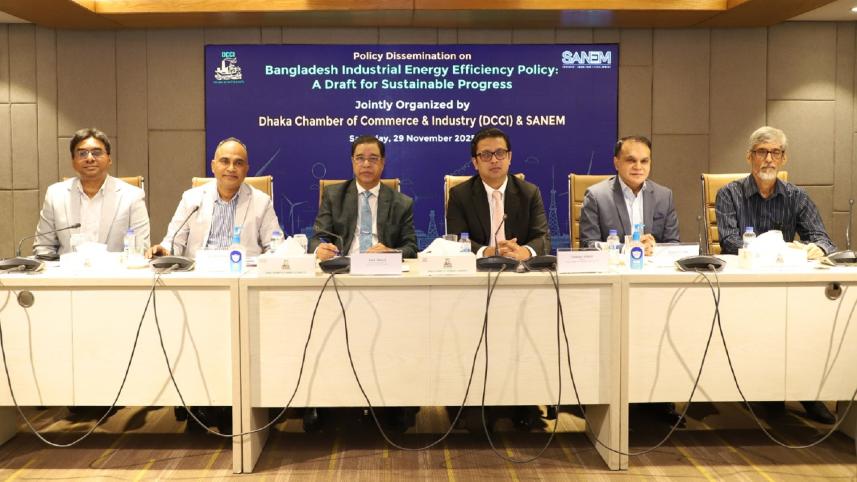
Factories are failing to utilise the available energy, with some losing a large chunk of their potential energy because of old machinery, lack of proper audits, and policies that exist largely on paper, experts have said.
The inefficiency and wastage have become two of the major crises for the sector, already struggling with persistent supply challenges and high costs, industrialists, policy experts, economists, and regulatory officials said at a policy dissemination event on industrial energy efficiency in Dhaka today.
 For all latest news, follow The Daily Star's Google News channel.
 Bangladesh already has two major planning documents but lacks a clear industrial efficiency policy that can be enforced, Selim Raihan, executive director of the South Asian Network on Economic Modeling (Sanem), said at the event jointly organised by Sanem and the Dhaka Chamber of Commerce & Industry (DCCI).
Delivering the keynote address, he pointed to the poor implementation of the Energy Efficiency and Conservation Master Plan (EECMP) 2016 and the Integrated Energy and Power Master Plan (IEPMP) 2023.
"EECMP 2016 aims to reduce energy intensity by 20 percent by 2030, with benchmark targets for energy-heavy industries like steel and cement, while IEPMP 2023 focuses on energy security, affordability, and sustainability. But both plans fall short in terms of implementation and regulatory enforcement," he said.
Citing Sanem research, he said energy wastage or loss is up to 90 percent in some industries.
Raihan, also a professor of economics at Dhaka University, said only 16 industrial energy audits have been conducted so far, despite 189 large consumers having been identified for mandatory audits.
"The result is massive waste. Many industries are using outdated equipment and lack the financial and institutional support to adopt efficient technologies," he noted.
Jalal Ahmed, chairman of the Bangladesh Energy Regulatory Commission, warned that domestic gas reserves could be depleted by 2030, as exploration has barely progressed in recent years.
"Despite repeated expert warnings, progress in both offshore and onshore exploration has been negligible," he said, adding that this has pushed the country toward importing expensive gas and subsidising the energy sector while overall efficiency remains at just 30 percent.
"Raising efficiency to even 60 percent could bring significant relief," he said, urging stronger implementation of energy audits and more efficient captive power generation systems.
Ahmed also urged the garment sector to increase the use of renewable energy, noting that the European Union is moving toward a 42.5 percent clean energy share by 2030 and that Bangladesh's exports could be affected if the industry does not keep pace.
Md Rafiqul Islam of the Bangladesh Energy and Power Research Council said imported energy cost Bangladesh about $20 billion last fiscal year.
"Energy security is now as critical as food or national security," he said, adding that the private sector must play a greater role in domestic energy production.
Power Grid Bangladesh PLC Chairman M Rezwan Khan said load shedding is occurring mainly because of fuel shortages, not grid capacity issues.
He also said the tariff structure needs revision and suggested separate peak and off-peak rates.
DCCI President Taskeen Ahmed noted that gas prices rose by 178 percent in the last fiscal year and increased again by 33 percent.
He said the cost increase severely affected production in key sectors such as textiles, steel, and fertiliser, with output down by 30 percent to 50 percent in some industries.
Industry representatives, including those from renewable and financing bodies, repeated calls for lowering taxes, wider incentives for renewable energy, easier access to loans for green projects, stricter enforcement of existing policies, and mandatory audits.
Comments