


Aston Martin GT 8 Pro Dream Edition review: fast, flashy and a bit fussy

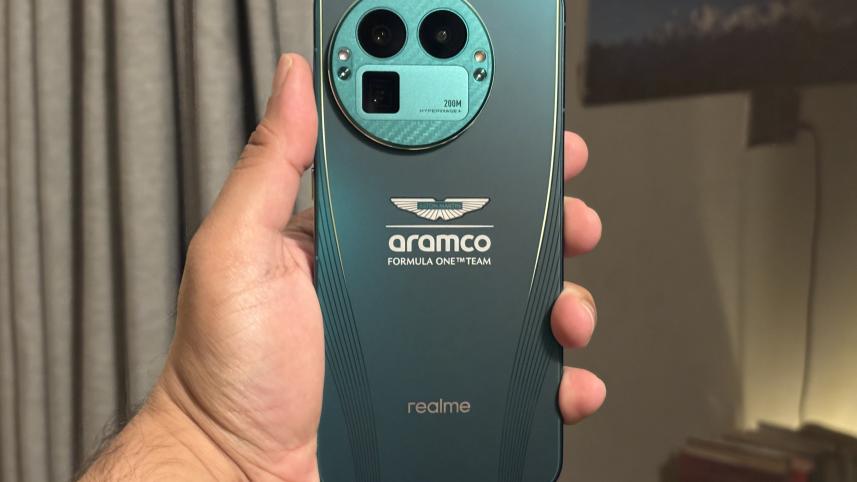
Realme's partnership with Aston Martin was never going to be subtle, and the GT 8 Pro Dream Edition, like its predecessor, leans into that from the moment you open the box. This is a phone that wants you to know it's "special" before you've even peeled off the factory film.
Underneath the motorsport theatrics, you're of course looking at the same core hardware as the standard GT 8 Pro: flagship processor, huge battery, serious camera credentials and the latest Realme UI. The Dream Edition adds motorsport flair, a bespoke Aston Martin skin and a handful of design tricks that range from genuinely premium to faintly pointless.
 For all latest news, follow The Daily Star's Google News channel.
 After using this limited edition unit as my main phone for a week, I came away impressed by the fundamentals, amused by some of the extras and mildly annoyed by a couple of missteps Realme didn't need to make.
Design and build: drama in racing green
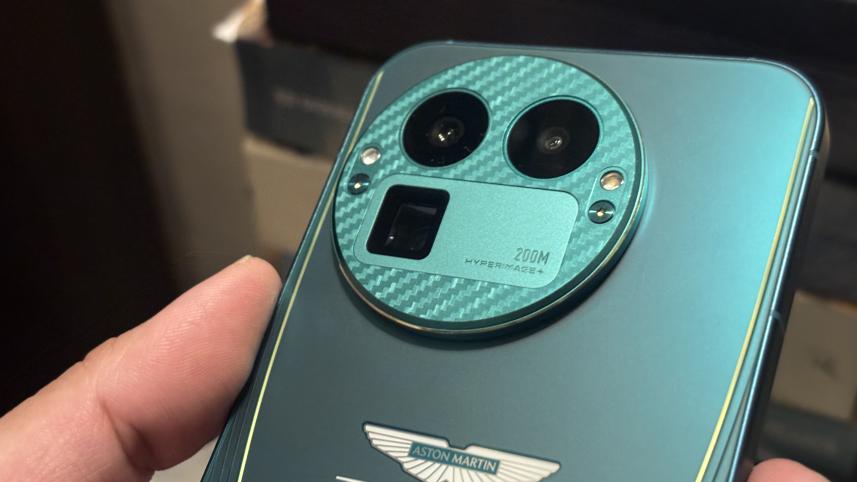
Just like the GT 7 Pro, Realme has clearly worked closely with Aston Martin's F1 branding team on this one as well, perhaps a little too closely. The Aramco logo on the back is enormous, and there are moments when it feels as if the title sponsor is getting more real estate than Aston Martin itself. If you're buying this as a motorsport keepsake, that may not bother you; if you just like the car brand, you may wish the iconic wings were allowed to take the lead.
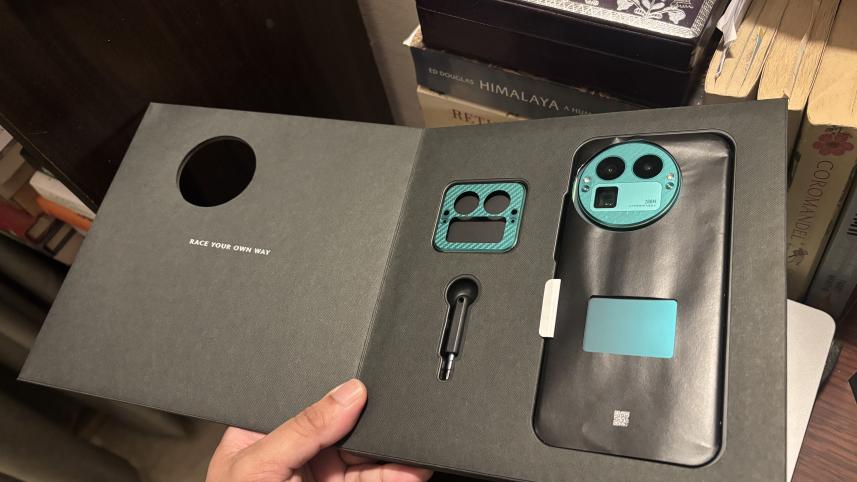
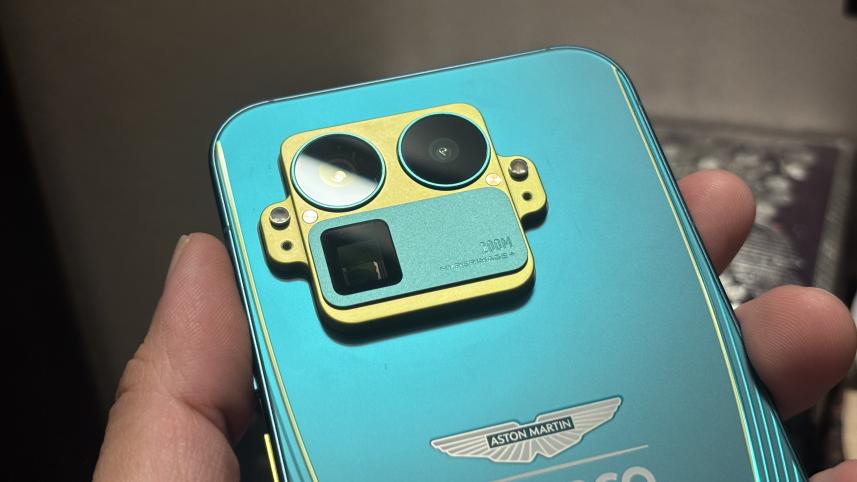
There's also a whole subplot around the interchangeable camera plate. In the box you get a tiny Torx screwdriver and the option to swap the default circular camera surround for a squarer design. It's a cute idea on paper. In practice, you try it once, realise the phone looks broadly the same either way, and the screwdriver disappears into a drawer forever. Realme even provides two separate cases, one for each plate, which feels like over-engineering for a feature most people will ignore.
Strip away the branding experiments, though, and the GT 8 Pro Dream Edition is simply a well-built, comfortable phone with a striking finish. It looks and feels the part.
Screen and audio: bright, fast, flat
On the front you get a 6.78in 2K AMOLED display, and it's one of the GT 8 Pro's strongest arguments. It's sharp, smooth and, critically, flat, which means no annoying edge reflections and no accidental touches when you're gaming or scrolling.
Refresh rate tops out at 120Hz in the interface, with 144Hz unlocked only in supported games. Realme has gone with LTPS rather than LTPO, so you don't get the most advanced variable refresh rate trickery, but in daily use the panel still feels every inch a flagship: responsive, fluid and consistent.
Brightness is frankly silly in the best way. Realme rates it at up to 7,000 nits peak in small HDR highlights and around 2,000 nits outdoors, and it shows: the screen remains legible in harsh sunlight without that washed-out look some panels slip into.
Less impressive are the stereo speakers. They get loud enough, but the sound profile is fairly flat, with not much low-end weight and limited sparkle in the highs. Fine for TikTok and YouTube; less so if you care about music.
Haptics are pleasantly tight and precise, and the ultrasonic fingerprint sensor is excellent—fast, consistent and drama-free. Over the course of testing, I didn't have a single failed unlock worth noting.
Performance and gaming: Snapdragon goes full throttle
Inside, the Dream Edition mirrors the regular GT 8 Pro, and that is no bad thing. Qualcomm's Snapdragon 8 Elite Gen 5 sits at the heart, paired with 16GB of LPDDR5X RAM and 512GB of UFS 4.1 storage. On paper, that's bona fide flagship territory; in practice, it behaves like it.
The phone breezed through heavy multitasking, photo and video editing and the usual barrage of social and productivity apps. Games such as Call of Duty: Mobile ran smoothly, even during extended sessions. In benchmarks the GT 8 Pro Dream Edition lands just shy of the very top Android numbers, but in real-world use you'd be hard-pressed to notice any meaningful gap.
Realme is also leaning on its Hyper Vision+ AI chip, which can insert extra frames to make motion look smoother even when a game isn't rendering at that rate. In practice, certain titles can trigger the panel's 144Hz mode, although, as usual, there are trade-offs. Call of Duty: Mobile will happily give you 120fps, but only if you're willing to drop graphics to lower settings; pushing everything to "high" generally caps you at 60fps.
The one oddity is the USB 2.0 port. On a device that otherwise feels relentlessly modern, having a slower wired interface for data transfers looks out of step, especially if you shoot a lot of high-resolution video and regularly offload footage to a laptop.
Cameras: Ricoh flair with a weak ultra-wide
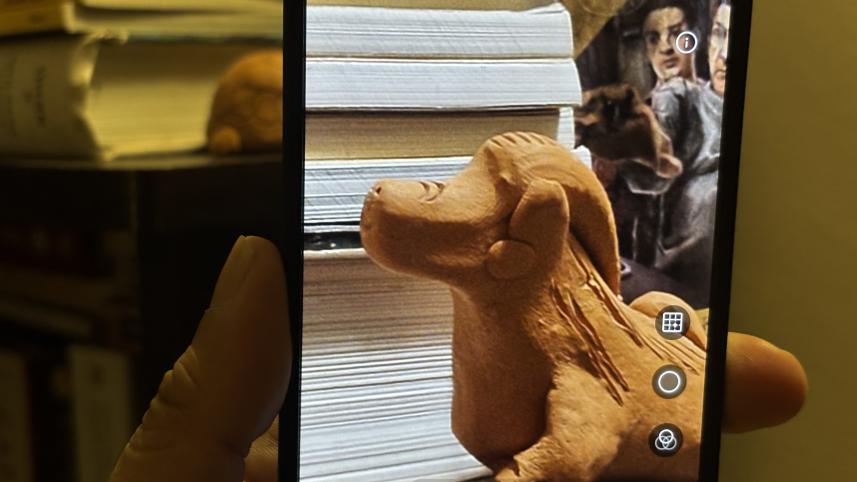
The GT 8 Pro Dream Edition is the debut device in Realme's partnership with Ricoh, best known for its GR series cameras beloved by street photographers. Rather than just slapping a logo on the back, Realme has actually tried to reflect that heritage in the software.
There's a dedicated GR-style mode offering 28mm and 40mm focal lengths in a 3:2 aspect ratio, with Ricoh-tuned film profiles and a Snap Focus option that lets you raise the phone and fire off a fixed-focus shot instantly. It's more thoughtful than most first-time collaborations, and the film looks to add character without turning everything into an Instagram filter.
Hardware-wise, the rear setup combines a 50MP main camera, a 50MP ultra-wide and a 200MP telephoto with 3x optical zoom – the latter a first for Realme. The main sensor, a Sony IMX906, is shared with some rival flagships and it shows: daylight images are detailed with strong contrast and pleasantly punchy colour. It does lean towards saturation, but rarely strays into cartoon territory.
Low-light performance is solid. The night mode has a habit of brightening scenes quite aggressively, yet noise is mostly kept in check. It's not the most natural look, but it's one many people will happily share straight to social feeds.
The 200MP telephoto is a genuine highlight. At 3x, portraits and mid-range zoom shots look crisp and clean, with good separation and pleasing depth. Push to 6x and you still get usable results, though fine detail begins to tail off. Beyond that, it's largely a party trick: yes, the phone can technically reach 120x, but you'll almost never want to keep those images.
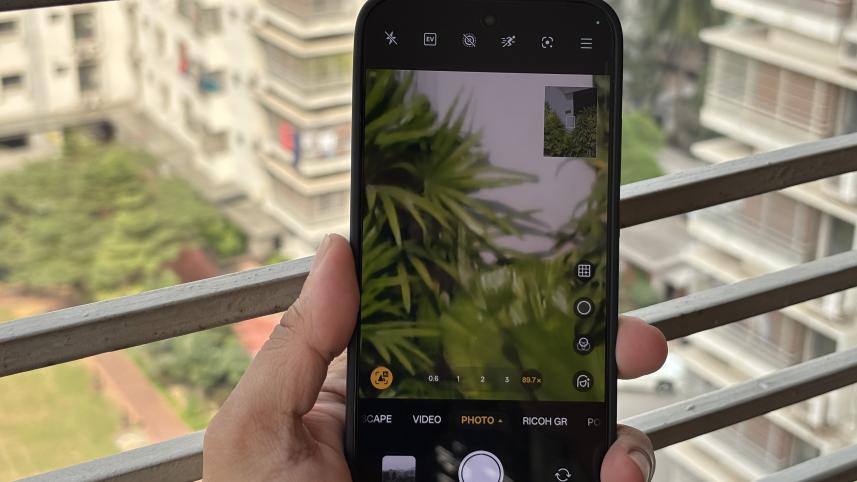
The weak link is the 50MP ultra-wide. In daytime it delivers acceptable results, but textures can look smudged if you zoom in, and in low light it quickly loses sharpness and dynamic range. It's fine for group shots in decent light; less so for anything more demanding.
Video is impressively specced. You get 4K at up to 120fps on both the main and telephoto cameras and 8K at 30fps, plus 10-bit LOG recording and Dolby Vision HDR. Footage has good dynamic range and colour depth, and Realme's stabilisation is competitive with other Android flagships in this class.
The 32MP front camera is serviceable rather than special. In good light it produces sharp, colourful selfies; in dimmer conditions noise creeps in and detail softens. The lack of autofocus is a miss at this level; it would have helped nail focus at closer distances.
Software and AI: Realme UI grows up
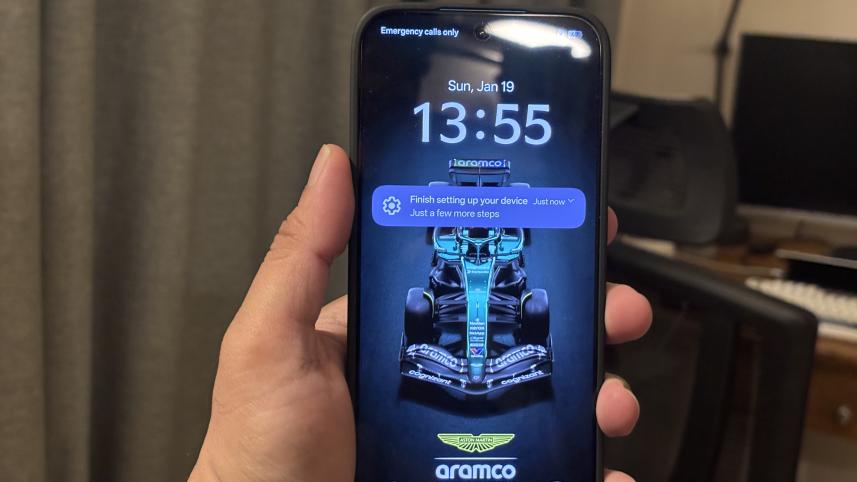
The GT 8 Pro Dream Edition ships with Realme UI 7 on top of Android 16, making it the first Realme handset to debut the new skin. On this edition you also get a full Aston Martin theme out of the box, complete with bespoke icons, wallpapers and animation flourishes that lean hard into the F1 aesthetic.
It's fun, but a bit much for everyday use. I lasted a few days before switching back to the standard icon pack, which feels cleaner and easier to parse at a glance.
Beyond the motorsport gloss, Realme UI 7 is a meaningful step forward. The new "Light Glass" design language brings a tidier lock screen, translucent widgets and refreshed system icons. There's a definite whiff of iOS inspiration, but Realme has avoided outright cloning and the end result is polished.
Expanded icons, which effectively turn app icons into mini widgets with quick actions, are genuinely useful, and the updated Flux theme engine does a better job of applying colour accents consistently across the system. There is some pre-installed third-party software, but it's neither excessive nor sticky – most of it can be removed in a couple of minutes.
On the AI front, you get Google's latest tools baked in—Gemini Assistant, Gemini Live, Circle to Search and on-screen translation—alongside Realme's own efforts in the gallery: AI Eraser, Ultra Clarity, Unblur, Perfect Shot and more. These are the kind of quietly helpful features you actually end up using, tweaking a photo before you share it rather than generating surreal fantasy scenes.
Mind Space, shared with Oppo and OnePlus devices, is also here. Think of it as an AI-assisted scrapbook: you can throw in screenshots, web clippings and notes, then let the system organise and summarise them. For students, researchers or anyone who lives in their reading list, it's surprisingly handy.
Realme is promising four years of major Android updates and five years of security patches, which now counts as respectable rather than class-leading, but should see the phone comfortably through a full life cycle.
Battery and charging: big cell, big numbers
The GT 8 Pro Dream Edition's 7,000mAh battery is one of its headline features, and in normal use it lives up to the spec sheet. On busier days with mixed use—social apps, email, photography, streaming and some gaming—I regularly saw around seven hours of screen-on time with a bit left in the tank. On lighter days, it drifted easily into a day and a half.
Under sustained gaming load, that advantage narrows. Around 45 minutes of Call of Duty: Mobile knocked roughly 13% off the battery, which is noticeably more than some slim competitors managing higher frame rates. The capacity is huge; the efficiency is good rather than miraculous.
Charging is brisk. With the bundled 120W charger and Smart Rapid Charging enabled, a full charge from empty is done in well under an hour, with the phone powering up extremely quickly in the early stages. Turn that feature off and the total time stretches out, but the handset stays significantly cooler during the process. There's also 50W wireless charging for topping up on a pad at your desk or bedside.
Verdict: for F1 die-hards, not everyone else
The Aston Martin GT 8 Pro Dream Edition is not a shy phone. It's loud, confident and very keen to justify its special-edition status with bold design and flourishes you won't find on the standard model.
Crucially, the basics are strong: the display is excellent, performance is top-tier, the battery is genuinely large, the camera system, particularly the Ricoh-flavoured shooting experience and the 3x telephoto, is fun and capable, and Realme UI 7 feels like a mature Android skin with a sensible dose of AI.
Set against that are a few head-scratchers: an over-enthusiastic sponsor logo on the back, a gimmicky removable camera plate most people will never touch twice, a weaker ultra-wide camera and a USB 2.0 port that undermines the otherwise high-end spec sheet.
If you're an Aston Martin or F1 obsessive, this is probably the version of the GT 8 Pro you've had your eye on from the start, and you'll enjoy the racing-inspired details every time you pick it up. If you don't care about the motorsport tie-in, the regular GT 8 Pro gives you essentially the same experience without the theatrics, and for most people, that will be the more sensible choice.
Comments