


Youth successfully cultivates grape in Sreemangal

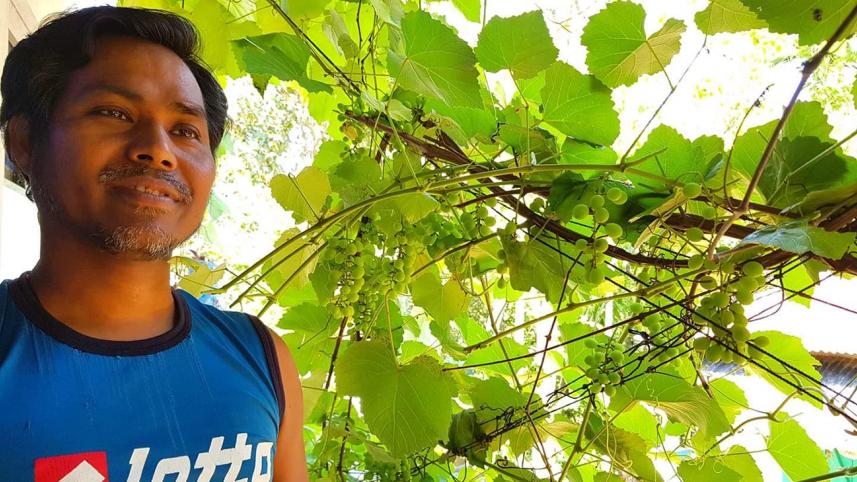
It is quite a sight finding green grapes hanging from vines, a scene often attributed to the Mediterranean regions.
However, this may also become common in Bangladesh soon. Surprised?
After successful cultivation of orange and pineapple in Sreemangal upazila of Moulvibazar district, the land has yet again produced wonders, this time making grape cultivation a success.
Kemon Pohduweng, a youth from the Khasi community in Lunglia punjee (village) under the upazila, has found success in cultivating grapes on a small scale privately.
His grapevines often attract crowds, while also inspiring local youths to grow grapes commercially.
"I bought two grape saplings from a nursery in Samshernagar of the district as a hobby and planted those at home three years ago. At present, the trees have produced many clusters of grapes," Kemon told The Daily Star.
"Before planting the grape saplings, I dug a hole and applied organic fertiliser in it, and then planted the saplings. The plants did not need much watering in the dry season. After applying manure and water in the soil, no additional fertiliser was given and no separate care was taken. The vines bore fruits last year. As the vines expanded, the scaffolding had to be made," he said.
"However, the grapes are a bit sour since I did not cultivate the fruit following commercial techniques. But at least we now know that cultivation of the fruit is possible here," the youth also said.
"After getting success in the first season, I expanded my orchard and incorporated commercial techniques," he added.
Nilufar Yasmin Monalisa Sweety, Sreemangal upazila agriculture officer, said, "Sreemangal, geographically a hilly area, has opened the door to bright opportunities for grape cultivation in the country. We have come to know that in Lunglia of Sreemangal upazila a youth from Khasi community has been cultivating grapes. If found commercially feasible, grape cultivation in this region may become popular and profitable.
"If successful, in future we may not have to import grapes any more. We would have fresh harvest in the market without preservatives and additives, and this would also contribute to the country's economic development," the official said, adding the youth had contacted them about the sourness of the grape and had been advised to test his soil.
"So far, three productive grape varieties have been selected for cultivation in our country -- Zakkau, Black Ruby, and Black Pearl. All three varieties transform into three different colours in summer and later to light brown and black. It takes about two years for the crop to come," the official added.
"Following Kemon's success, many youths from the community want to cultivate the fruit commercially," said Saju Marchiang, publication secretary of Khasi Welfare Association.
Comments