


Empowering lives through meaningful participation
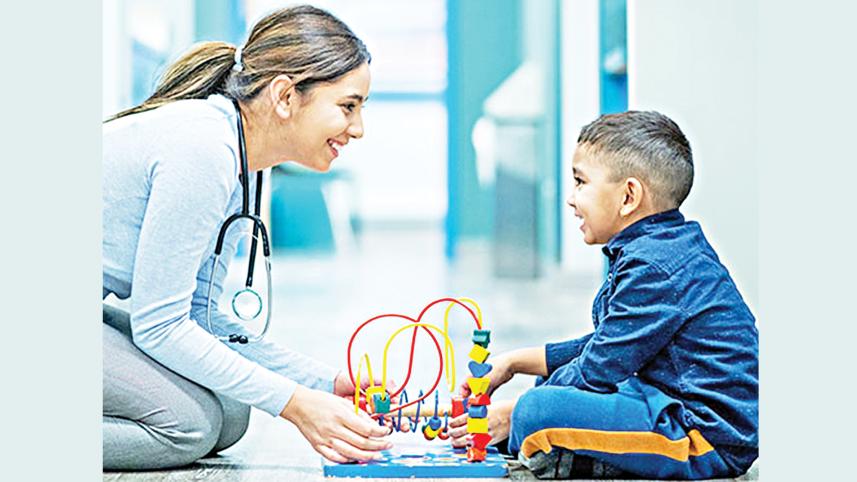
It was a sunny morning in Dhaka when little Rafiq, a seven-year-old boy with cerebral palsy, smiled for the first time while learning to hold a pencil on his own. For weeks, an occupational therapist had been guiding his mother on how to help him practice hand movements through play-based exercises using common household objects. That one moment — a small hand holding a pencil — was more than a skill gained; it was a symbol of independence, confidence, and dignity.
Stories like Rafiq's unfold quietly every day in therapy centres, hospitals, and homes across Bangladesh. This is the heart of occupational therapy in action — helping people of all ages engage in the activities that give life meaning.
 For all latest news, follow The Daily Star's Google News channel.
 On 27 October 2025, the world observes World Occupational Therapy Day, an initiative of the World Federation of Occupational Therapists (WFOT). This year's theme, "Occupational Therapy in Action," highlights how occupational therapists empower individuals and communities to participate fully in daily life — to live, learn, work, play, and belong.
Occupational therapy (OT) is a science-driven, person-centred health profession that supports people to do what they want, need, or are expected to do in their everyday lives — despite illness, disability, or social barriers. It bridges the gap between medical recovery and meaningful living.
A growing relevance in Bangladesh
As Bangladesh advances toward inclusive and equitable healthcare, the importance of occupational therapy is becoming increasingly clear. However, public awareness about the profession remains limited. Many still think rehabilitation means only physiotherapy, while occupational therapy focuses on function, participation, and everyday living.
Across the country, occupational therapists are quietly contributing to community-based rehabilitation, special education, mental health services, and elderly care. Their interventions promote productivity, reduce long-term dependency, and enhance quality of life — aligning perfectly with national goals of inclusion and sustainable development.
To truly empower people with disabilities and support recovery after illness or injury, Bangladesh needs greater investment in occupational therapy education, policy recognition, and service expansion.
How we can celebrate and support the cause
Share stories of change: Highlight people whose lives have been touched by occupational therapy — children who can now write, workers who return to their jobs, elders who regain independence.
Organise public awareness events: Clinics, hospitals, and universities can host open sessions or community demonstrations showing how daily activities can be adapted to individual needs.
Engage policymakers and media: Advocate for inclusion of occupational therapy in mainstream healthcare systems and national development planning.
Spread the message online: Use social media to promote this year's theme — "Occupational Therapy in Action" — and emphasise that participation is a human right.
As Bangladesh embraces the spirit of Occupational Therapy in Action, let us support the growth of this vital profession. Let us recognise the quiet heroes — the occupational therapists — who work every day to bring dignity, participation, and hope into people's lives.
Because when participation happens, life happens.
The writer is a 4th Year student of BSc in Occupational Therapy, at Saic College of Medical Science & Technology (SCMST).
Comments