


Cartoons for Equality: When Cartoons Speak against Violence
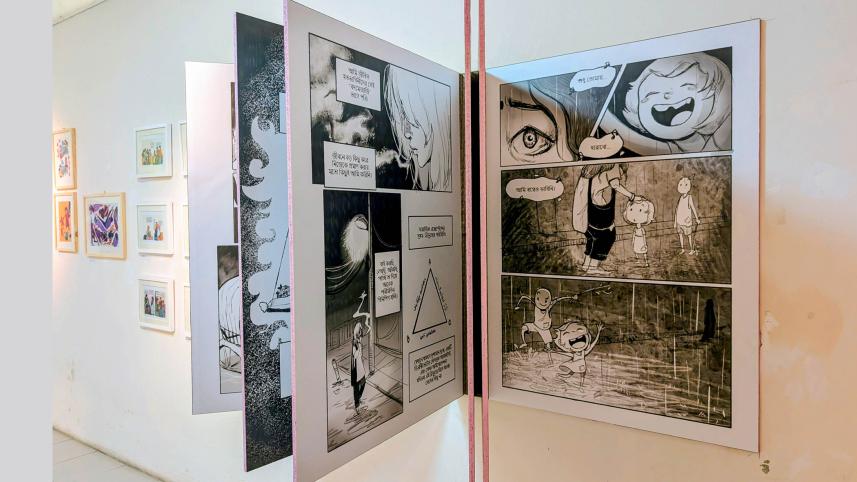
A cartoon exhibition had turned into a powerful voice against gender-based violence in Bangladesh. Titled "Cartoons for Equality: Prevent Violence against Women and Girls," the 10-day festival that recently ended, celebrated creativity, protest, and conversations around equality, all through the playful yet powerful world of cartoons.
Organised by Cartoon People, Bonhishikha- Unlearn Gender, and Maa Er Doa Studio, in partnership with UN Women Bangladesh and supported by the government of Canada, the festival blended art, activism, and awarenessto create a meaningful impact on society.
 For all latest news, follow The Daily Star's Google News channel.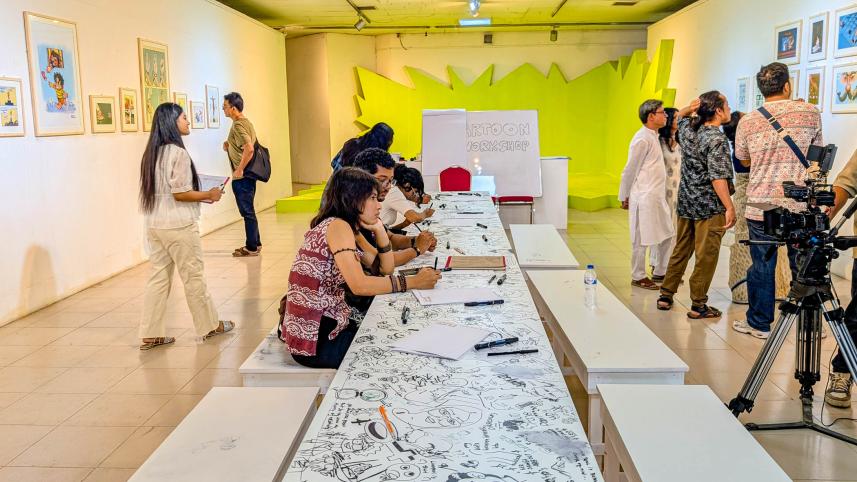
"As far as we know, this is the largest cartoon exhibition to date," shared Syed Rashad Imam Tanmoy, renowned cartoonist and founder of Cartoon People. "We received around 350 submissions within just three weeks, and interestingly, half of the participants were women, which is phenomenal. From the submission, we selected 215 artworks to showcase in the exhibition."
But the festival wasn't just about the cartoons on walls. Itfeaturedlive murals, live games, workshops, and interactive installations that invited people to think, talk, and act.
"A heavy topic like violence against women and girls needs awareness," Tanmoy added. "Cartoon is such a medium that can make a serious topic lighter, but it never takes away the weight of the issue. We launched this exhibition, so people come, celebrate, talk about gender equality, and protest together."
The impact of the event began long before the opening day. While the cartoons were originally submitted via email, most were also shared in Cartoon People's public Facebook group, reaching more than 55 lakh people online. The responses were mixed: many expressed strong support, while others denied that harassment against women even exists at home, work, or online.

Interestingly, this contrast only made the artists stronger. "Cartoonists got inspired by other cartoonists' courage," explained Tanmoy. "Some felt low after seeing the hate comments. But we motivated them to stand tall, because their work made people talk. And that's what mattered: the conversations had started. That's what cartoons do, they create dialogue, they protest, they push society to reflect."
The exhibition space itself was vibrant with collaboration and creativity. Corners featured three live murals, each telling a different story of resistance and hope. One of the live murals was initiated by two sisters Ayomoy Aronno and Angona Ahsana, that came alive with around seven days of work, with both visitors and artists participating. Its rhythm, colours, and movement echoed harmony and the spirit of the cause it stood for.
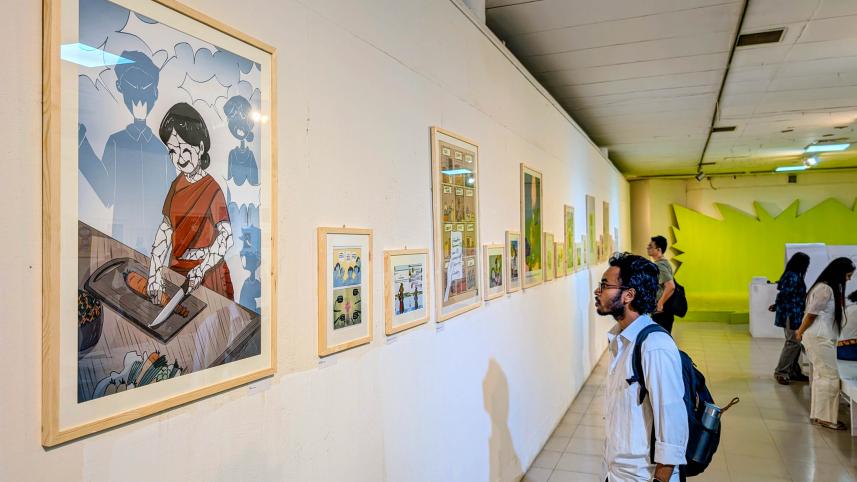
Another highlight was aletter to mom, a letter delicately embroidered on a kantha by artist Nusrat Laxme, in which, she stitched her love and unspoken complaints, a heartfelt tribute reflecting the journey, struggles, and resilience of her mother.
One of the participants, Anika Nawar Eeha, who also worked as a live caricature artist at the exhibition, used her cartoons to portray violence against women, in the workplace, in public spaces, at home, andonline. "The idea behind these cartoons was to make people notice the issues women in our society face every day," Eeha explained.
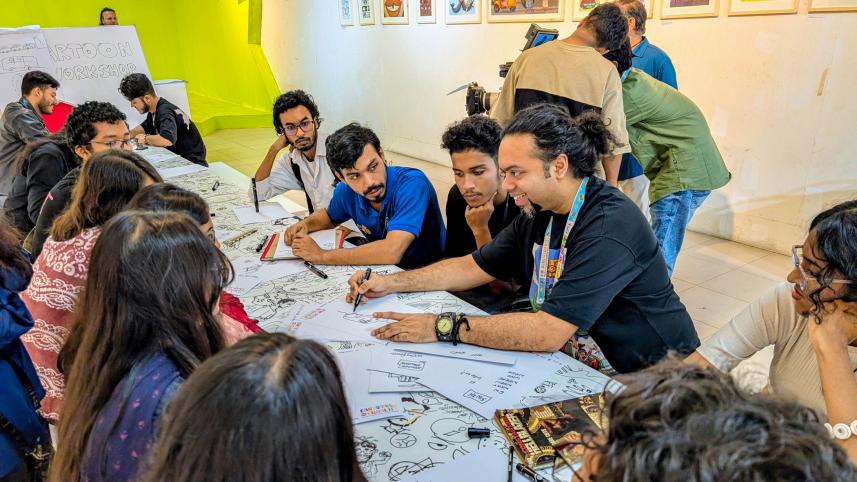
Through humour, symbolism, and colours, Cartoons for Equality has turned the walls of the exhibition into mirrors, reflecting the society we live in, and the one we hope to build.
"Our goal was to raise awareness, start conversations, and protest," Tanmoy explained. "And here, we've seen how cartoons have the power to make all of this happen."
Comments