


Ensure regular water supply to Ctg residents
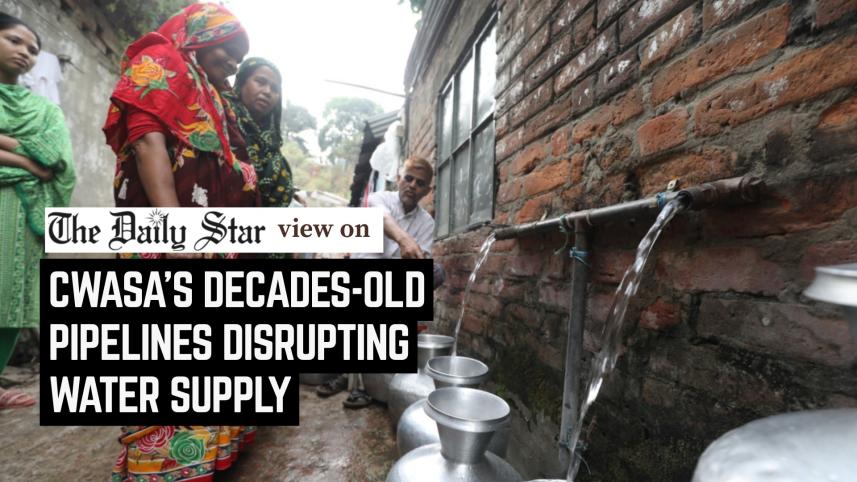
We are concerned by the severe water shortages faced by nearly 40,000 consumers in Chattogram as CWasa's decades-old pipelines continue to collapse. A report published in this daily reveals that thousands of residents in the city are forced to wait late into the night just to collect enough water for basic daily use. Many must stay awake for hours to fill their reservoirs during short, irregular supply windows. Others, despite having official connections, have not received a single drop of water for years.
Reportedly, the root of the crisis lies in the outdated uPVC and cement pipelines installed 35 to 40 years ago. These brittle lines can no longer withstand the pressure required for uninterrupted supply. CWasa has divided the city network into six sectors, and five of them still rely on 375 kilometres of old pipelines spanning Barik Building to Patenga, Khulshi to AK Khan, Amin Jute Mill to Oxygen, Bahaddarhat to Mohra, and Khaja Road to Chaktai. These five sectors serve nearly 40,000 customers, almost half of CWasa's 90,846 billable connections. The worst-hit Barik Building to Patenga sector alone affects around 15,000 people. For many affected residents and businesses, the only alternative is to buy water at high prices from private sellers, deepening their financial burden. That some households continue to pay minimum monthly bills despite never receiving any water at all is particularly concerning.
 For all latest news, follow The Daily Star's Google News channel.
 It is most unfortunate that CWasa has not been able to modernise its infrastructure in line with the growing demands of a rapidly expanding city. Over the past decade and a half, it reportedly implemented eight small and large water supply projects at a cost of Tk 8,800 crore. Yet, no pipeline connections have been installed in more than a hundred areas, leaving at least 12 lakh people facing an acute water crisis. What is surprising is that even after six decades of operation, CWasa still does not have a master plan, which is essential for its effective functioning.
We urge the CWasa authorities to urgently replace its crumbling pipelines and ensure smooth and regular water supply for all its consumers. While CWasa officials have acknowledged the degraded state of the infrastructure and stated that a project to replace all outdated lines by 2029 is underway, this timeline offers little comfort to consumers currently living without proper access to water. The agency, therefore, must accelerate the replacement process, prioritising the most severely affected sectors. Interim measures, such as alternative supply arrangements and billing waivers for consumers not receiving water, are equally essential.
Comments