


There’s nothing like having an independent country!

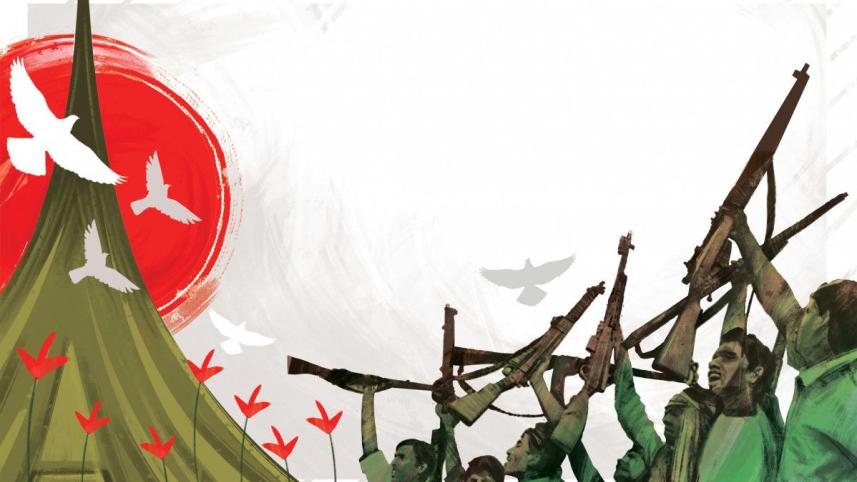
Some years ago, during a discussion on leadership and national transformation, one participant asked a question that has stayed with me ever since: what would have happened if we had lost the 1971 war?
That question still makes me pause and think aloud, especially now that this defining moment in our history is being compared with the July 2024 uprising.
 For all latest news, follow The Daily Star's Google News channel.
 What really would have happened if we had lost our War of Liberation? The massacre and havoc would surely have been far greater; countless more people would have been killed by the occupying forces and their local collaborators. Many would have been drifting endlessly in search of safety, much like the Palestinian people who have been forced to wander without a home. India, already overwhelmed by nearly 10 million refugees from what was then East Pakistan, might have cracked under the burden.
I remember a speaker once saying at a dialogue at Brac University that it was a blessing the war lasted only nine months; had it continued much longer, the economy might have been in ruins and recovery would have taken decades. The comment made sense, yet to me it did not capture the full magnitude of what independence made possible.
Today, in 2025, Bangladesh stands transformed in many ways. The country has produced thousands of entrepreneurs, professionals and diplomats. It is recognised for its social progress, women's empowerment, greater access to education and an economy that, despite its struggles, has remained resilient. When Bangladesh emerged in December 1971, it was one of the world's poorest nations; since then, it has lifted millions out of poverty and built an economy worth more than $460 billion. Per capita income has risen to around $2,820 in the current fiscal year. However, growth has slowed to about four percent, which reminds us that independence does not end challenges; it merely allows us to confront them on our own terms.
Our diplomats carry the national flag in capitals around the world, millions of Bangladeshis work abroad and most are respected for their honesty and discipline. Global corporations now employ a new generation whose parents once lived through the trauma of war. The "Made in Bangladesh" label appears in stores across the globe, while our ready-made garments industry has become one of the world's largest. Members of Bangladesh's peacekeeping forces serve from Africa to the Middle East and are admired for their professionalism. The success of micro-credit continues to inspire others, and the idea of social business, introduced by Professor Muhammad Yunus, is part of global development thinking.
Despite its imperfections, Bangladesh has often been cited as a functioning example of a Muslim-majority democracy; policymakers and investors around the world increasingly recognise that it is possible to generate both profit and growth here. All this has happened because independence allowed us to take ownership of our own path.
None of these achievements would have been possible had we lost the war in 1971. Most decisions would have been taken in West Pakistan; most high offices would have been theirs, not ours. Unemployment among the educated would have been higher and the coffers on our side much thinner.
Many of my friends believe that victory in the war was inevitable because the cause was just and the nation stood united. I am less certain of inevitability; history could easily have turned the other way. That is why we should never stop asking what would have happened if we had lost. The question itself reminds us of the price and value of freedom.
Much has changed since I first thought about this more than a decade ago. Bangladesh is preparing to graduate from the United Nations' list of least developed countries. The economy has shifted from agriculture to manufacturing and services, while new sectors such as technology, pharmaceuticals and light engineering are gaining ground.
There are other areas where we have progressed. Our foreign policy has matured; Bangladesh now negotiates trade and peace on its own terms, manages regional tensions and balances relationships between larger powers. The entrepreneurial energy of our youth, especially in start-ups, fintech and e-commerce, is reshaping the domestic economy and building a bridge to the digital future.
Yet the challenges are greater too; climate change threatens crops and cities alike. For example, a recent World Bank study estimated that heat-related losses alone cost the country nearly $1.8 billion in 2024. But we can design our own response to these crises because we are an independent country.
Yet independence is not static; it has to be renewed through accountability and courage. On August 5, 2024, the world watched as mass student protests and a popular movement led to the fall of a long-standing government and on August 8, they saw the installation of an interim administration headed by Professor Muhammad Yunus. That transition was not without pain or controversy, but it reminded us that democracy and independence are living processes. The spirit of 1971 was never only about winning a war; it was about ensuring that power remains accountable to the people. The events of 2024 showed that Bangladeshis still hold that spirit close to heart, even when the path is uncertain.
There is truly nothing like being an independent country. The victory of 1971 opened the door to self-determination and development; if we had lost, our history would have been one of dependency and denial of our identity, rights and freedom. But victory is never the final chapter; it is only the beginning. The years ahead will demand that we protect democracy, strengthen institutions, embrace innovation, face climate change with resilience and share the fruits of growth more equitably.
Independence gave us the right to dream; transformation will depend on how wisely we use that right. Let us continue to honour those who fought for our freedom by making sure the nation they created remains worthy of their sacrifice.
Mamun Rashid is a former banker and economic analyst.
Comments