


Beyond Tin Roofs: Building Dignity Brick by Brick
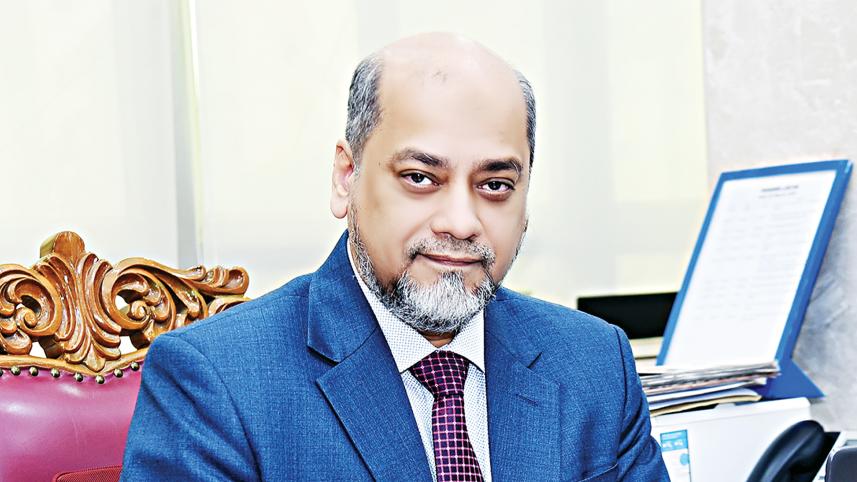
Mr. Mohammad Ali, Managing Director and CEO, Pubali Bank PLC.
Bangladesh's housing market is expanding beyond city centres, fuelled by strong demand from rural and semi-urban families seeking stability and comfort. Affordable home loans and digital access are transforming how people build and upgrade their homes, making ownership achievable for more Bangladeshis than ever before. To understand this shift toward inclusive housing finance, The Daily Star spoke with Mr. Mohammad Ali, Managing Director and CEO of Pubali Bank PLC.
 For all latest news, follow The Daily Star's Google News channel.
 The Daily Star (TDS): In the last two to three years, what trend have you observed in the demand for home loans, and what is driving it?
Mohammad Ali (MA): Our home loan portfolio has grown by over 40 percent, far outpacing the seven to eight percent growth in the overall real estate market. The main driver is our "Affordable Housing" scheme, focused on rural and semi-urban borrowers. We provide loans ranging from Tk 2 to 10 lakh to help people upgrade kacha or tin-shed houses into permanent brick homes. There is massive demand in this underserved segment.
TDS: How are changes in interest rates and government policies affecting home financing?
MA: Home loans are very low-risk assets for banks, with default rates of just one to two percent. Because of that, banks, including ours, offer these loans at preferential rates, usually two percent lower than other loan types. As interest rates continue to decline, we expect housing loan rates to stabilize around nine to ten percent, making them even more attractive and affordable.
TDS: Which specific loan services such as green housing, women's housing finance, or developer financing are most popular?
MA: It depends on geography and customer type. Among urban, high-income clients, green and eco-friendly housing is gaining popularity. But for most people in rural and semi-urban areas, affordable housing loans dominate. It's simple economics. A 1,000 square foot flat in a city costs Tk 40 to 50 lakh, while a family in a village can build their own home for Tk 10 to 12 lakh. We also see strong demand for renovation loans in cities and women-led loans linked to migrant remittances, where wives manage the financing while husbands send money from abroad.
TDS: What are the main challenges developers and individual buyers face in securing financing?
MA: The biggest issue we deal with is fund diversion. Borrowers use loan money for other purposes like buying land instead of construction. For buyers, land documentation and ownership verification are major hurdles, as Bangladesh's land records can be messy. There is also a gap between registered and market property values, which complicates valuation for financing.
TDS: Are innovative partnerships or digital solutions simplifying the loan process?
MA: Yes, very much. We have launched a web-based online application system where customers get an instant initial sanction—about 95 percent accurate—without visiting a branch. Our field officers then handle physical verification and document collection. This hybrid model has made the loan process faster and more convenient.
TDS: What's your outlook for the housing market in 2025 and 2026, and how is your bank preparing?
MA: The housing market should grow by about 12 percent by 2025 and 2026, thanks to lower construction material costs. Our bank is targeting over 40 percent portfolio growth by expanding digital marketing, deploying 1,000 field officers, and focusing strongly on affordable housing. Beyond business, we see it as our social duty—helping families move from tin-shed to brick-built homes that offer comfort and protection from extreme heat.
Comments