


Bridging dreams and doorsteps
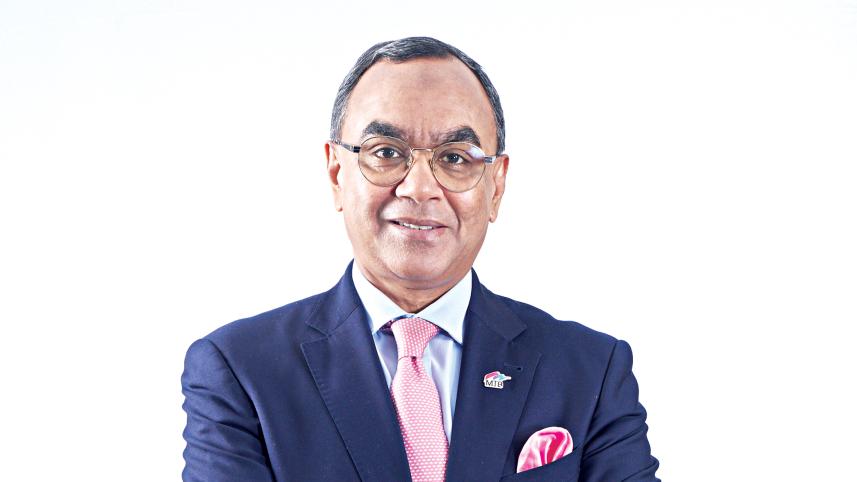
Syed Mahbubur Rahman, Managing Director and CEO, Mutual Trust Bank PLC.
Bangladesh's housing finance market is evolving as affordability, technology, and smarter urban planning reshape how people buy and build homes. With growing demand among middle-income and semi-urban borrowers, banks are focusing on innovation and accessibility to sustain growth. The Daily Star spoke with Syed Mahbubur Rahman, Managing Director and CEO of Mutual Trust Bank PLC (MTB), about the emerging trends, challenges, and the bank's strategy for inclusive and technology-driven home financing.
 For all latest news, follow The Daily Star's Google News channel.
 The Daily Star (TDS): What are the key trends in home and construction finance over the last few years?
Syed Mahbubur Rahman (SMR): Home loan disbursements have remained steady, with notable growth in the middle-income and salaried segments. Construction finance for small and medium-sized developers has also expanded, particularly in peri-urban areas where land is more affordable. Affordability has been enhanced by new shared land development models and flexible payment terms offered by developers. With customers becoming more informed and cost-conscious, banks are innovating to improve affordability, convenience, and speed.
TDS: How are interest rates and regulatory shifts affecting the market?
SMR: Recent interest rate movements and regulatory adjustments have created both opportunities and challenges. Bangladesh Bank's initiatives for prudent lending, rate rationalisation, and loan restructuring have influenced borrowing appetite. However, higher interest rates and increased construction material costs have moderated the pace of new loan applications. In response, banks are offering flexible repayment options and promotional campaigns to maintain customer confidence.
TDS: What products or schemes are gaining traction?
SMR: Home loans are straightforward products, mainly divided into two types: home equity loans for construction on owned land, and apartment purchase loans. Both are available through conventional and Islamic banking. Specialised products like green housing loans, women's housing finance, and SME developer financing have yet to gain wide popularity, and their market penetration remains limited despite being available.

TDS: How is the bank supporting sustainable housing?
SMR: A regulatory guideline for green housing finance exists but needs refinement. The primary barrier is that constructing environmentally friendly homes incurs higher costs, making them unaffordable for many customer segments.
TDS: What are the main challenges for developers and buyers in accessing finance?
SMR: For developers, financing is made riskier by global economic uncertainty, rising construction costs, and political unrest. For buyers, access to finance is constrained by strict income assessments and stringent eligibility criteria. A significant challenge is the BDT 2 crore home loan ceiling, which is often insufficient due to escalating property prices, forcing buyers toward higher-interest NBFIs and hindering their financial planning. We believe authorities should reconsider this limit. At MTB, we categorise developers to structure financing accordingly and use TPA-based financing for buyers to improve accessibility.
TDS: How is housing demand evolving between urban and semi-urban areas?
SMR: Bangladesh's housing finance market is transforming due to rapid urbanisation and digitalisation, with demand remaining resilient. A recent trend shows a shift toward smarter, community-oriented solutions, reflected in large condominium projects. While urban housing demand will continue to rise, we see semi-urban and rural regions as the next frontier for affordable, self-owned housing, supported by improved connectivity and government incentives.
TDS: Are innovative partnerships or digital solutions making finance easier?
SMR: Technology integration, including paperless processing and digital loan approvals, is redefining the customer experience. These are complemented by strategic partnerships with developers and property solution providers for a seamless process. The next major leap is AI-driven credit assessment to enhance decision-making accuracy, though developing the required infrastructure for system-wide inclusion is a critical prerequisite.
TDS: What is your outlook for 2025-26, and how is MTB positioned for it?
SMR: At Mutual Trust Bank, we have introduced pre-approval platforms and data-driven tools to provide conditional approvals within 48 hours. Our vision for 2025-26 is to strengthen these capabilities while deepening collaboration with developers, fintech partners, and regulators. By combining innovation, inclusivity, and sustainability, we aim to make home ownership a more accessible reality for every aspiring Bangladeshi.
Comments