


Financing the future home
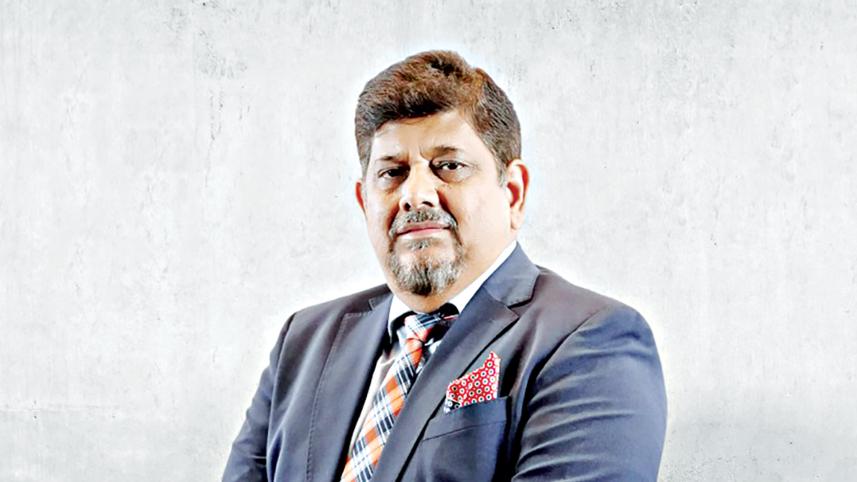
Mohd. Rafat Ullah Khan,
Managing Director (Current Charge), Al-Arafah Islami Bank PLC.
 For all latest news, follow The Daily Star's Google News channel.
 With urbanisation reshaping how Bangladesh builds and lives, housing finance has become central to making homeownership accessible. Rising construction costs, shifting regulations, and new sustainability goals are changing how banks serve this demand. To understand these shifts, The Daily Star spoke with Mohd. Rafat Ullah Khan, Managing Director (Current Charge) of Al-Arafah Islami Bank PLC.
The Daily Star (TDS): What trends are you seeing in home and construction finance demand?
Mohd. Rafat Ullah Khan (MRUK): Despite macroeconomic challenges like inflation, currency volatility, and tightened liquidity, demand has remained resilient. The rising US dollar increases construction material costs and property prices, but demand is sustained by salaried professionals and middle-income households. Key drivers include post-pandemic recovery, urbanisation, and steady remittances, which are fueling investment in semi-urban and suburban housing beyond traditional city centres.
TDS: How are interest rate movements and regulatory shifts affecting the market?
MRUK: The transition to market-based lending rates (like the SMART model) has introduced volatility, impacting affordability and repayment capacity for middle-income borrowers. This has caused some to delay home-buying decisions. Concurrently, regulatory initiatives from Bangladesh Bank's Sustainable Finance Department are promoting green and energy-efficient housing with concessional profit rates. Our Home Investment scheme, operating under the HPSM (Hire Purchase under Shirkatul Melk) mode, is designed to make homeownership more affordable and convenient amidst these changes.
TDS: What specific products or schemes are gaining traction?
MRUK: Beyond our flagship products, we see strong growth in several segments. Financing for Non-Resident Bangladeshis (NRBs) is a high-growth area, as they invest foreign earnings in local real estate. We are also enhancing specialised facilities for women and SME developers to promote financial inclusion. Sustainable housing is another key focus, supported by our partnership with the Housing and Building Research Institute (HBRI) for affordable green solutions.
TDS: How is the bank supporting sustainable or smart housing projects?
MRUK: We offer special terms, such as lower profit rates and longer tenors, for certified green homes (LEED, EDGE, etc.). We also provide tailored finance to developers for green construction and to homeowners for installing energy-saving features like solar panels. Furthermore, we partner with institutions like the World Bank and ADB for intermediated funds and are incorporating ESG criteria into our lending decisions, viewing sustainable buildings as lower-risk assets.
TDS: What are the key financing challenges for developers and buyers, and how do you address them?
MRUK: The primary challenges include complex land documentation, inconsistent property valuations, high land prices, and difficulty proving stable income, especially for borrowers in the informal sector. To address these, we use a multi-tiered legal verification process for clear land titles, a comprehensive income assessment guideline, and offer flexible financing tenors and phased construction finance to manage cash flow and ease the equity burden for our clients.
TDS: How do you see the evolution of urban vs. semi-urban housing demand?
MRUK: While urban demand remains strong, high prices are shifting growth to semi-urban areas and newly developing southwestern regions. We are catering to this with products like our Semi-Pucca Home Investment scheme, which has minimal documentation and no prior authority plan approval required. Our strategy addresses both urban vertical expansion (apartments) and semi-urban horizontal growth (individual homes) by expanding our network of branches and agent banking outlets into these areas.
TDS: Are there any innovative partnerships or digital solutions making finance easier?
MRUK: Digitalisation is central to our strategy. Our mobile app, 'AIBL i-Banking,' allows clients to manage their accounts seamlessly. We have also digitised our application, verification, and sanction processes, significantly reducing turnaround times. We are now exploring partnerships with FinTechs for pre-approved financing and cautiously adopting AI-driven tools to improve our risk assessment.
TDS: What is your outlook for the housing market in 2025–26?
MRUK: The outlook is highly optimistic, driven by projected GDP growth, accelerating urbanisation, and supportive government policies. We expect steady property price growth, particularly in suburban zones. Al-Arafah Islami Bank is positioning itself to support this growth by strengthening our focus on green projects and affordable housing, in line with Islamic finance principles.
Comments