


Housing Finance Trends Digital, Sustainable, and Affordable
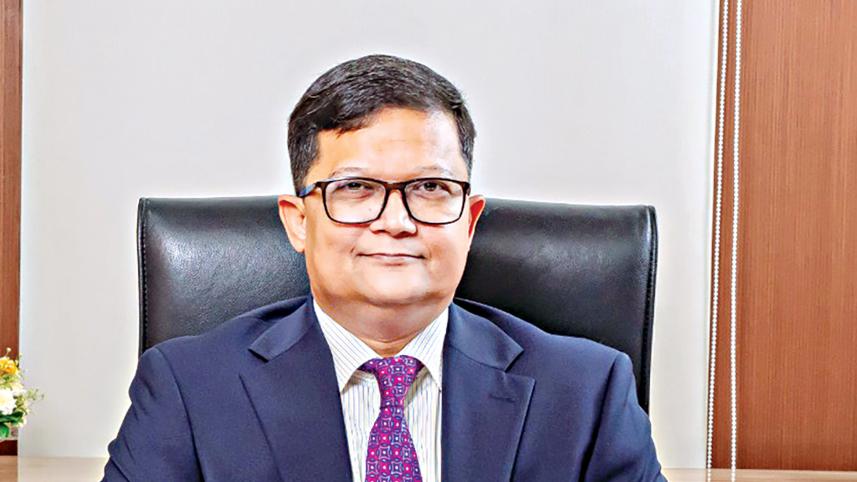
Tareq Refat Ullah Khan, Managing Director & CEO, BRAC Bank PLC.
Bangladesh's housing market is undergoing a significant transformation, with urbanisation, a growing middle class, and evolving financial landscapes reshaping demand. BRAC Bank's comprehensive suite of home loan solutions is designed to cater to diverse customer needs, from purchasing and constructing to renovating homes. They emphasise accessible financing with competitive rates, flexible repayment tenures, and tailored products.
 For all latest news, follow The Daily Star's Google News channel.
 The Daily Star(TDS): What trends are you seeing in home loan or construction finance demand in the last 2–3 years?
Tareq Refat Ullah Khan (TRUK): BRAC Bank has observed sustained demand over the past few years. Rapid urbanisation has been a major catalyst, expanding real estate activity beyond Dhaka and Chattogram to emerging urban centres across the country. The growing middle class, driven by the aspiration of homeownership, has increasingly turned to formal banking channels for financing, attracted by trusted service and competitive rates. We have also witnessed a gradual shift from stand-alone homes to apartments, especially in metropolitan areas such as Dhaka, Chattogram, Sylhet, and Rajshahi, as property prices continue to rise.
A new trend gaining momentum is group housing, where customers collectively purchase land shares and develop residential buildings together. This evolving demand calls for innovative financing solutions to support collective ownership and promote social inclusion. Developers, too, are responding by focusing on condominium-style projects that better utilise urban space.
TDS: How are interest rate movements and regulatory shifts affecting homeownership or construction projects?
TRUK: Home loans are long-tenure products, making them highly sensitive to interest rate fluctuations. The recent period of elevated rates has notably dampened demand, as borrowing costs remain high across many banks and NBFIs.
Additionally, regulatory constraints, such as the current loan-to-value cap of 70% for creditworthy borrowers and the maximum loan ceiling of BDT 2 crore, have stifled market growth. These factors, taken together, restrict affordability and discourage potential homeowners.

TDS: What products or schemes (e.g., green housing loans, women's housing finance, SME developer financing) are gaining traction?
TRUK: Affordable housing is emerging as a significant growth segment, with rising demand from middle-income families, young professionals, and underserved households in suburban and peri-urban areas. A promising new model is group or cooperative housing, where communities jointly develop residential clusters. This approach reduces per-unit cost, encourages shared infrastructure, and makes homeownership more accessible.
Demand is also expanding beyond major cities as land and construction costs in Dhaka and Chattogram push buyers toward smaller towns. BRAC Bank's "TARA Home Loan," dedicated to empowering women to own homes through formal financing and achieve financial independence.

TDS: How is the bank supporting sustainable or smart housing projects?
TRUK: At BRAC Bank, sustainability is deeply embedded in our lending philosophy, not merely a corporate obligation. We are actively developing frameworks to promote green and smart housing through both policy alignment and innovative financing solutions. Digital transformation plays a central role in this journey. Home loans are being redesigned to offer faster, more transparent, and environmentally responsible experiences. Significant investments in digital infrastructure will soon allow customers to apply for loans seamlessly through our website with minimal documentation.
TDS: How do you see urban vs. semi-urban housing demand evolving?
TRUK: Housing demand in Bangladesh is steadily expanding beyond major metropolitan centres into semi-urban and peri-urban areas. In cities like Dhaka and Chattogram, rising land prices and limited space have pushed many middle-income buyers toward nearby districts such as Gazipur, Narayanganj, Savar, and Cumilla, where property remains more affordable and infrastructure is rapidly improving.
TDS: Are there any innovative partnerships or digital solutions that have made housing finance easier?
TRUK: Innovation and partnerships lie at the core of our housing finance strategy. BRAC Bank is advancing digital solutions to simplify the borrowing journey and make home loans more accessible. Our Astha app, now serving over 10 lakh users, offers a full suite of digital banking features. We are developing a fully digital loan origination system that will enable customers to apply for home loans online with minimal paperwork. We also plan to leverage data analytics and alternative credit assessment tools to support first-time and underserved borrowers.
TDS: What is your outlook on the housing market in 2025–26, and how is your bank positioning itself to support that growth?
TRUK: The outlook for Bangladesh's housing market in 2025–26 is cautiously optimistic. As inflation stabilises and economic confidence returns, demand for affordable and mid-segment housing is expected to strengthen. A growing base of young professionals and expanding semi-urban development will continue to drive this momentum. BRAC Bank is strategically aligning to capture this growth by offering tailored home loan products for diverse segments, including salaried professionals, women borrowers, freelancers, and NRBs.
Comments