


Rising middle class fuelling housing momentum
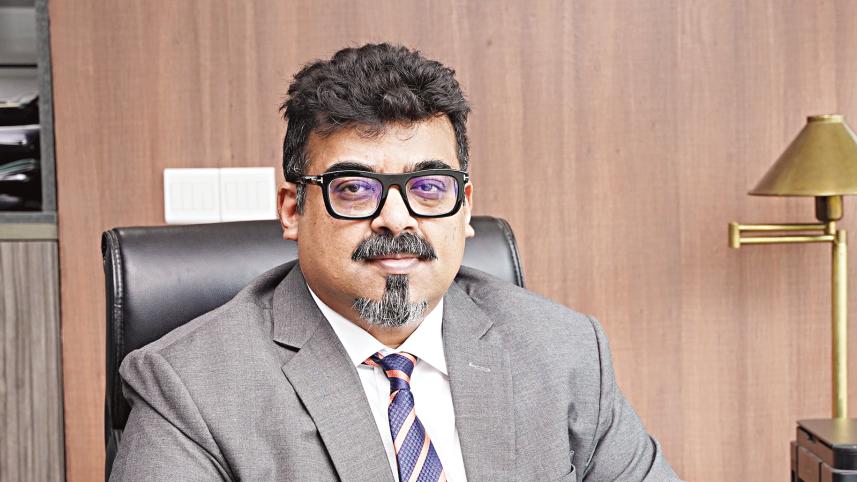
M. Nazeem A. Choudhury, Deputy Managing Director, Prime Bank PLC.
Bangladesh's housing market is in transition squeezed by rising costs but energised by new demand from middle-income and semi-urban buyers. With sustainability, digitalisation, and decentralised growth shaping the next phase, banks are rethinking how they lend and whom they serve. The Daily Star spoke with M. Nazeem A. Choudhury, Deputy Managing Director of Prime Bank PLC, on how the institution is driving inclusive and sustainable growth in housing finance.
 For all latest news, follow The Daily Star's Google News channel.
 TDS: What trends are you seeing in housing and construction finance demand?
M. Nazeem A. Choudhury: Demand has become polarised. The high-end apartment market has slowed, while middle-income buyers are prioritising value and speed, preferring ready-to-move-in flats in the 900–1,200 sq ft range. Persistent inflation and higher living costs have pushed many toward smaller, efficient homes and fuelled a lively secondary market. Construction finance remains steady, but mainly for reputed, compliant developers with proven sales performance.
TDS: How are interest rate changes and new regulations influencing the market?
MNC: Rate adjustments have encouraged more financial discipline among both buyers and developers, fostering long-term market stability. Meanwhile, the Detailed Area Plan (DAP) is reshaping urban growth through stricter planning and compliance. Though it demands adaptation, it ensures sustainability and better-organised development, improving the overall quality and reliability of new housing.
TDS: Which financing products or schemes are gaining traction?
MNC: Our Sustainable Finance portfolio is expanding rapidly, supported by Bangladesh Bank's green housing schemes. Women's housing finance, often paired with educational and professional support, is outperforming expectations. Most excitingly, our SME Developer Financing model — based on regional cluster partnerships — is unlocking new housing markets in suburban and secondary cities, reinforcing our commitment to decentralised economic growth.
TDS: How is Prime Bank supporting sustainable or smart housing projects?
MNC: We see ourselves as a driver of Bangladesh's green transition, not just a participant. Prime Bank offers preferential rates to projects achieving recognised green building certifications, encouraging developers to adopt energy-efficient design, solar systems, and advanced waste management. Smart housing — integrating digital connectivity and modern security — is another focus, ensuring that our financing supports enduring, high-value assets.
TDS: What challenges do developers and buyers face in accessing finance, and how are you addressing them?
MNC: Land documentation and lengthy approvals remain key obstacles. We've built a specialised legal and due-diligence team to fast-track title verification and reduce legal delays. For buyers, while registration costs stay high, we maximise loan eligibility and stretch repayment tenures to preserve affordability. Our edge lies in speed and certainty — delivering faster approvals through simplified internal processes.

TDS: How is demand shifting between urban and semi-urban areas?
MNC: Infrastructure megaprojects like the Metro Rail and new expressways are unlocking the potential of semi-urban corridors. These areas now offer better living quality at lower costs, drawing families away from city centres. Prime Bank's growth strategy targets exactly these emerging regions — financing developers and homeowners in high-potential zones that align with the government's decentralised urbanisation vision.
TDS: What digital solutions or partnerships are improving housing finance?
MNC: We're investing in digital platforms that let customers apply, track, and repay loans online. By digitising documentation, we aim for near-paperless processing and faster service. Our advanced data-analytics tools already enhance credit scoring and risk assessment, and we're developing predictive models to identify default risks early. This combination of speed and precision will enable higher loan volumes, especially in the SME segment.
TDS: What's your outlook for 2025–26?
MNC: The outlook is strong. A growing middle class, steady remittances, and normalising interest rates are set to stabilise the market and boost volumes. Prime Bank aims to lead the affordable-housing segment by focusing on compliant developers and infrastructure-linked growth corridors. Our priority is sustainable expansion — financing projects that strengthen communities and the wider economy.
Comments