


Sundarbans faces a new test as eco-tourism surges

 For all latest news, follow The Daily Star's Google News channel.
 - Padma Bridge unlocks Sundarbans tourism boom
- Eco-cottages reshape livelihoods along forest
- Visitor surge sparks conservation capacity concerns
- Masterplan seeks balance between people, nature
Before dawn breaks over the braided channels that carve through the Sundarbans, a small crowd gathers on the riverbank in Khulna. The air tastes of brackish water and diesel; the sky is bruise-coloured, and the horizon already hums with the low throb of boat engines.
Among the travellers is Abir Abdullah, a Dhaka-based businessman who has waited years to step into this mangrove labyrinth.
"It used to take eight to twelve hours to reach Khulna by road," he says, folding his shawl against the pre-dawn chill. "Now I board a midnight bus, get off in the morning and go straight to the launch within three to four hours. Three days of forest cruising, I want to see Dublar Char and join the Rash Puja."
Abdullah's eagerness reflects a recent wave.
More Bangladeshis, and gradually more foreign visitors, are heading into the world's largest mangrove forest. Since the Padma Bridge opened to traffic in June 2022, the Sundarbans has transformed from a remote, arduous journey into an accessible two- or three-day escape.
The upgrade has opened the path for a rapidly expanding tourism economy that promises livelihoods and local investment. At the same time, it also raises critical questions about conservation of one of the most important forests in the whole world.
NEW TOURISM FRONTIER
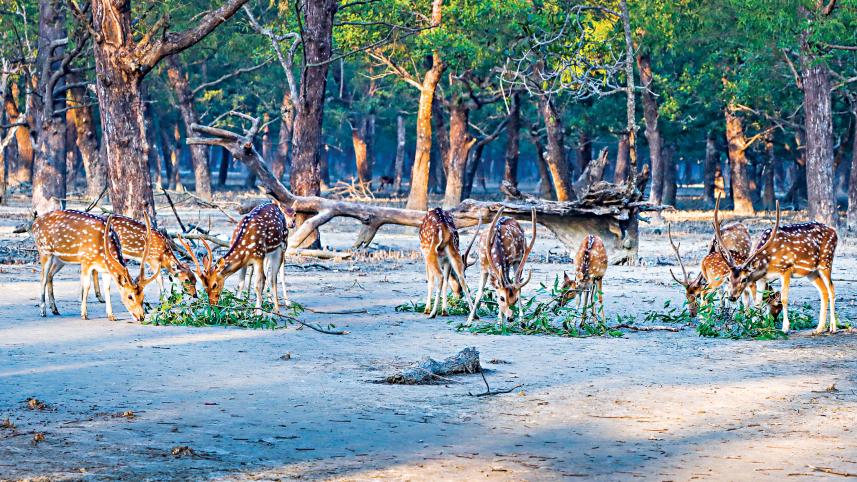
The Sundarbans, Bangladesh's 6,017-square-kilometre share of the global mangrove, contains a dizzying range of biodiversity: 334 species of plants, 315 bird species, 210 fish species, six species of dolphin and a threatened population of the Royal Bengal tiger.
For decades, the forest sustained a complex human ecology. Roughly 35 lakh people live around the Sundarbans, of whom about 6 lakh depend directly on it for honey, fish, crabs and golpata. Tourism, once marginal, is now emerging as a major alternative source of income.
Tour operators and local entrepreneurs have moved quickly to capture the opportunity.
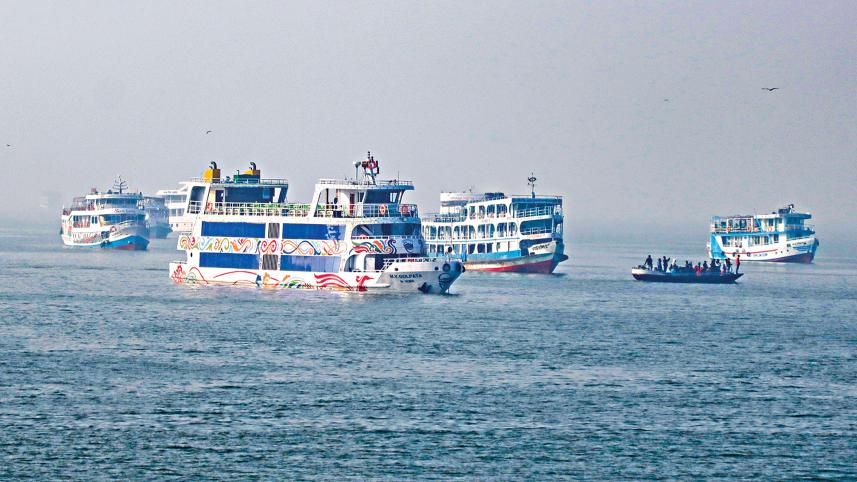
The Tour Operators Association of Sundarbans (TOAS) reports around 65 registered launches operating out of Khulna, with another five to seven boats plying similar routes outside the association.
The operators maintain about 200 trained tour guides, while a separate cluster of smaller operators in Mongla runs day trips to Karamjal and Harbaria.
Luxury cruises are no longer rare.
In the past two years, several high-end launches and cruise ships have entered the market, and companies such as Sea Pearl Beach Resort & Spa have introduced two lavish tour vessels.
Package prices vary widely. Budget travellers can join two-night, three-day wooden trawler trips for as low as Tk 4,500 to 7,500 per person.
Popular three-day packages for mainstream tourists range from Tk 7,500 to Tk 10,000. For a more comfortable cruise on air-conditioned launches or luxury vessels, prices rise to Tk 14,500 to Tk 22,000 per person.
Entry fees to the forest remain nominal for local visitors, set at Tk 1,050, but steep for foreigners at Tk 10,500 -- a strategy to attract foreign exchange while keeping domestic access affordable.
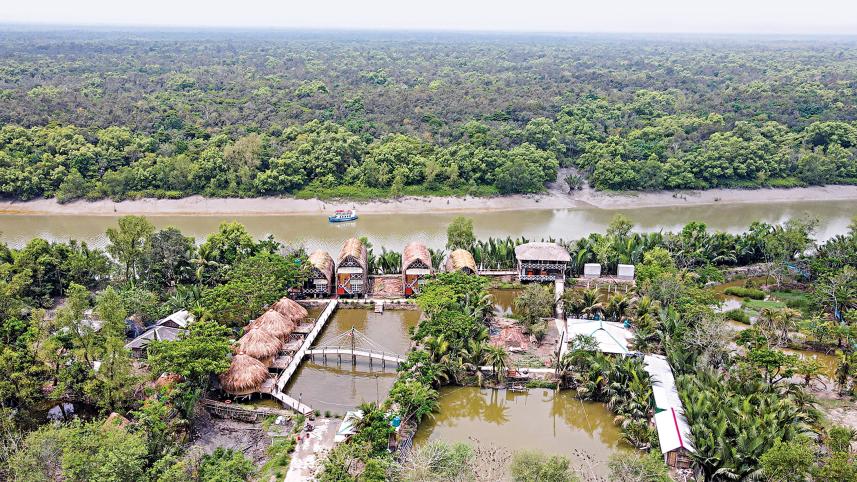
Along the riverfronts that border the Sundarbans, the landscape of livelihoods is changing fast. An eco-cottage boom has transformed coastal settlements.
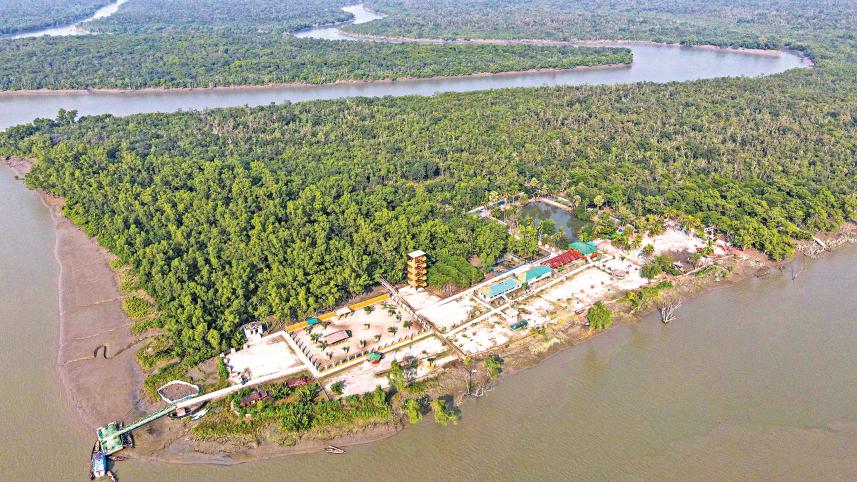
A recent survey documents at least 23 eco-resorts and cottages across Mongla, Banishanta (Khulna), Kailashganj and Shyamnagar (Satkhira), and local owners claim around 120 such facilities in the wider Khulna district, including Dacope's Kailashganj and Dhangmari.
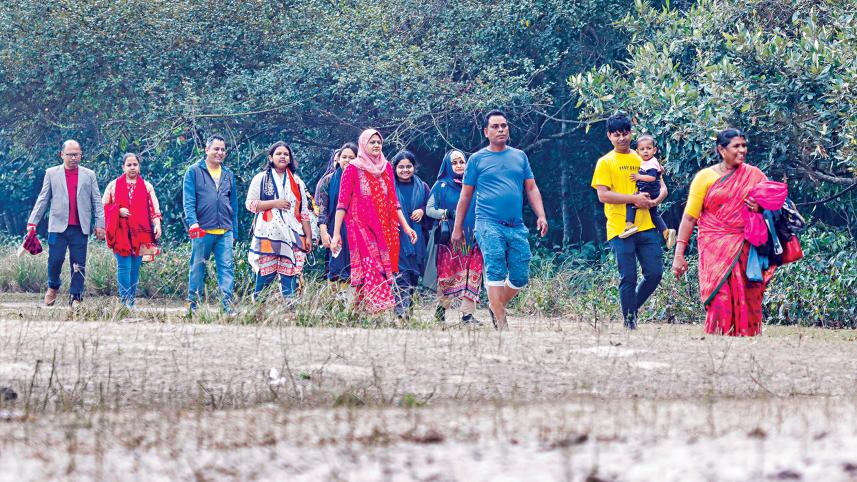
Names such as Jangalbari, Iraboti, Golkanon, Bonlata and Mangrove Haven have become familiar to weekenders and out-of-town families.
Most cottages represent capital commitments of Tk 1.5 to Tk 2.5 crore. Resort owners say their businesses have produced steady alternative incomes for hundreds of families, including hotel staff, boatmen, guides, food suppliers and handicraft vendors.
Local entrepreneurs also report contributing to community needs by supplying potable water, supporting remote health outreach and partnering on education initiatives.
"We wanted to create an economy around the forest without destroying it," says Zakaria Hossain Shawon, general secretary of the Resort Owners Association of Sundarbans.
"If we can show that the forest can generate sustainable livelihoods through careful tourism, then fewer people will risk illegal extraction," he said.
THREAT TO A FRAGILE ECOSYSTEM?
The ecosystem of the Sundarbans is a complex and fragile one. As tourism flourishes at a remarkable pace, there are concerns regarding the impacts on the forest.
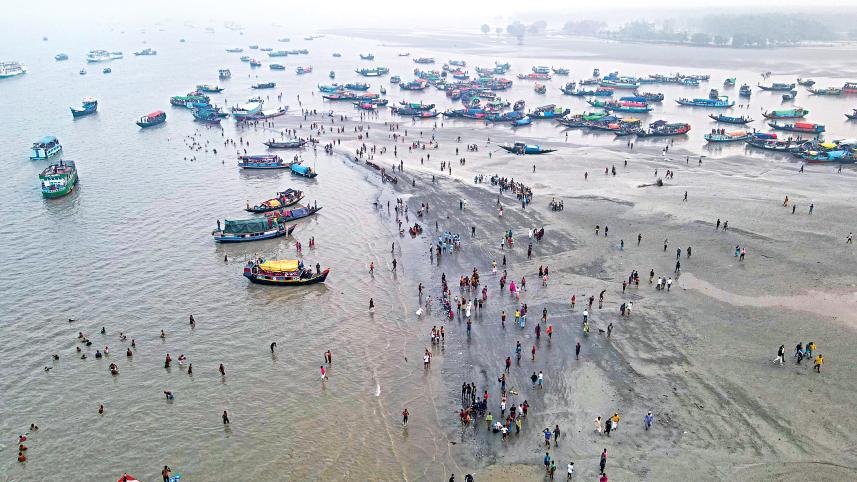
According to Forest Department records, Sundarbans visitor numbers have climbed sharply in recent years, from 128,175 in fiscal year (FY) 2015-16 to 216,143 in FY 2022-23.
In FY 2023-24, 211,057 tourists visited, generating roughly Tk 3.6 crore in revenue.
Operators note a 45 percent rise in domestic visitors after the Padma Bridge opened, with foreign arrivals also doubling.
"The forest has finite carrying capacity," says Imran Ahmed, conservator of Forests for Khulna. "Mass tourism, uncollected waste and extractive pressures can damage the ecology. Our priority is to keep tourism controlled, with strict zoning and trained eco-guides."
A 20-year Sundarbans Ecotourism Masterplan (2025-2045), developed by the Forest Department with USAID and Solimar International, aims to balance the conservation and community benefit.
It calls for regulated visitor flows, community-based tourism and a broader spread of tourist sites so that visitors do not congregate in a few vulnerable sites.
Professor Wasiul Islam of Khulna University, who led parts of the plan, says, "The objective was not conventional infrastructure expansion. We wanted a roadmap for sustainable tourism that protects biodiversity while creating meaningful livelihoods. When locals benefit, they become the forest's guardians."
The plan proposes new entry points and information centres at Mongla, Munshiganj, Shoronkhola and other gateways; improved waste management; limits on boats and promotion of homestays and cultural tourism. Some 200 eco-guides have already been trained.
But conservation is easier said than done. As the numbers of visitors grow, so do unregulated activities.
"Some activities inside the forest, such as crab collection, unregulated visits deep into sensitive habitats, and uncollected plastics, are not compatible with long-term conservation," said Professor Anwarul Kadir, executive director of the Sundarbans Academy.
"If we want to keep the tiger, deer and migratory birds thriving, we must enforce no-take zones and strictly regulate where and how tourists enter," he added.
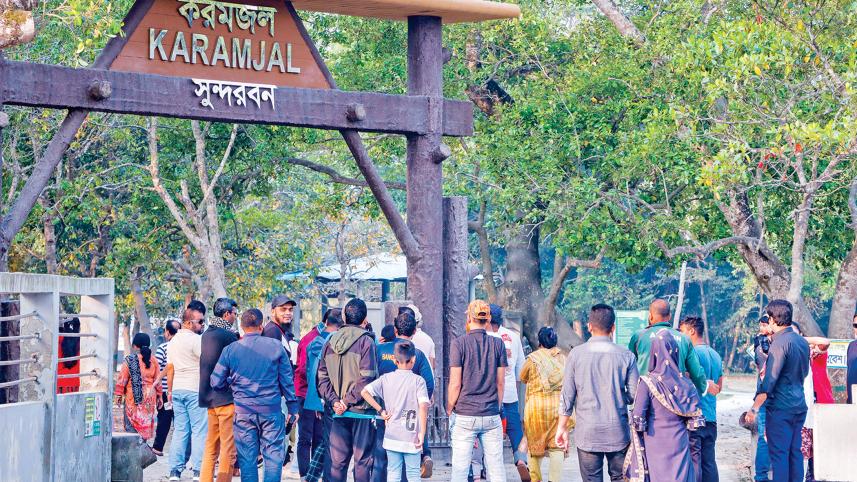
The Forest Department has added four new tourist zones -- Alibandha in Shoronkhola, Andharmanik in Chandpai Range, Shekhertek and Kailashganj within Khulna range -- to ease pressure on seven core sites in Kotka, Kachikhali, Dublar Char, Hiron Point, Harbaria, Kalagachhia and Karamjal.
Yet environmental fragility and human dependency complicate management.
TOWARDS SUSTAINABILITY
On the ground, perspectives are pragmatic. Nilufa Khatun, who once collected golpata and honey to supplement family income, says her life changed when a nearby eco-cottage began hiring local women for housekeeping and food preparation.
"Now I earn regular money, my children go to school," she says. "We still go into the forest sometimes, but less often."
But operators like Nazmul Azam David, general secretary of the Tour Operators Association of Sundarbans, stress safety and regulation.
"Many small operators are offering one-day trips from Mongla and Munshiganj. We have 57 registered vessels, 25 of them luxury, but need proper safety checks, crew training and coordination among government agencies so tourists are protected and the forest is not overused," he said.
The private sector is responding with mixed incentives.
Sea Pearl's Khulna Manager SM Musfiqur Hasan says their cruises regularly charge Tk 12,000-Tk 22,000 per person and draw well in peak season.
"The Padma Bridge has changed travel patterns," he says. "We now run two or more tours every week during the season. Investment is flowing in, but investors expect good governance and long-term planning."
If the masterplan and community initiatives succeed, the Sundarbans could become a model of eco-centred tourism that sustains both people and nature. But whether it keeps its wild heart depends on choices made today.
Comments