


Dhaka through the eyes of a rickshaw-puller

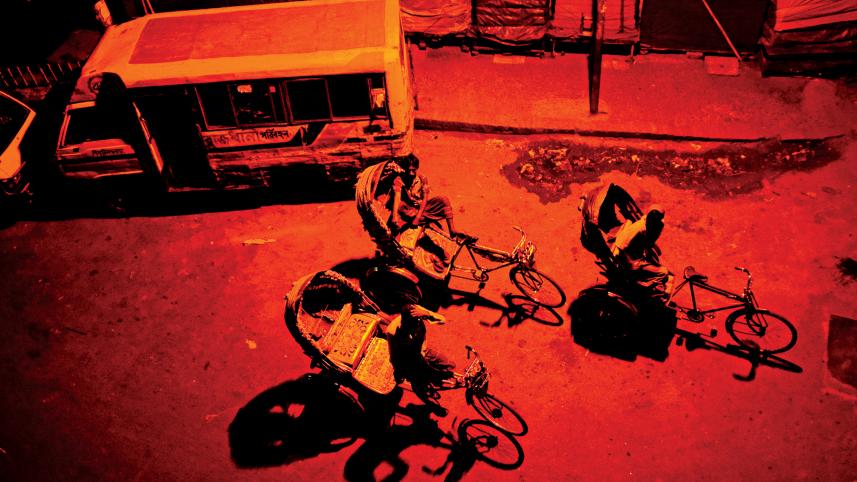
If there is one vehicle that truly defines Dhaka, it has to be the rickshaw! Three wheels, one bell, some flashy artwork, and infinite audacity. A contraption that makes you question science: how does it survive in a city full of apps, cars, and speed limits?
And the man who drives it, the rickshaw-wala mama, is perhaps Dhaka's truest narrator. Because nobody understands the city better than someone who navigates it inch by inch, hour after hour.
 For all latest news, follow The Daily Star's Google News channel.
 No, he doesn't write essays. At first glance, he looks ordinary -- a lungi or pant, a patched shirt or panjabi, a rusty bell, the usual. But once the wheels start moving, the urban data begins to flow.
"What's wrong with the city?" you ask. His answers are never bureaucratic. There is no mention of zoning codes, population density, or infrastructure. Instead, he says, "Bhoddrolokrao signal mane na, apa." (Even gentlefolk don't follow traffic signals, sister).
To him, this is the root of all chaos. Not climate change, not megacities, not density graphs, and certainly not his own occasional defiance of traffic rules. He talks about the city like it's a classroom where everyone cheated their way out of the traffic chapter -- except him.
Although he learned his lessons well! He knows every alley where time moves strangely faster, every shortcut that saves minutes, and which streets to avoid because "political meeting" or "traffic police await."
Forget Google Maps -- his knowledge is built on years of fieldwork.
He also believes Dhaka runs on two economies: the fare according to the metre in his head, and the fare dictated by the rider's outfit, mood, or corporate ID. Expensive shoes? Tk 20 extra. Student look? Tk 10 discount, along with a fifteen-minute lecture on education reform. Yet, he listens, too. He has heard every flavour of urban anxiety: breakups in Banani, burnout in Shahbagh, existential dread in Mohakhali. Sometimes, he even diagnoses. A fifteen-minute ride with him is no less than a therapy session.
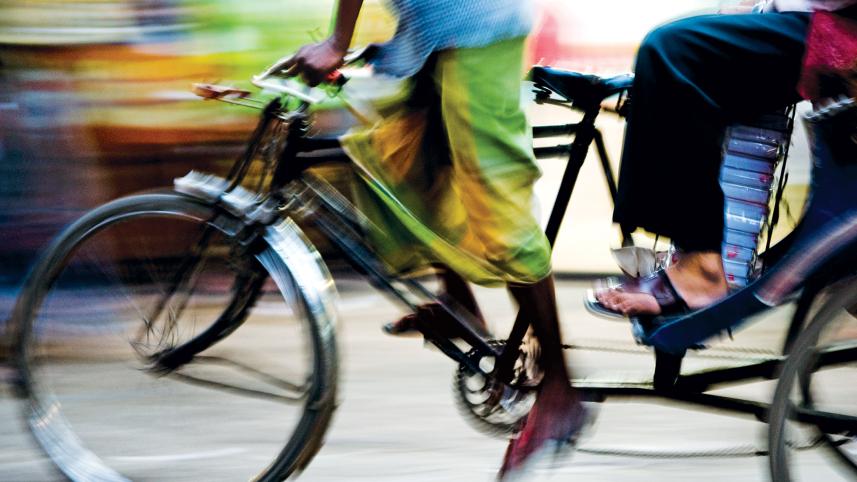
The mama is simultaneously economist, sociologist, therapist, and political analyst -- yes, all rolled into one.
Ask him about the city, and he doesn't call it unliveable. He points out lived problems you might add to a survey. Five minutes in his rickshaw, and you'll know his family tree, the fastest shortcuts not just in Dhaka but Rangpur or Sherpur, and how much he misses home.
Humour surfaces sometimes. But it's never cheap -- it's collected from lived pain. You might struggle with his accent, but you cannot miss his care, his observation, his insight. Some U-turns will make your heart skip, but he insists they save time. So, you listen.
And, as always, the rickshaw-wala mama has the last word -- part complaint, part confession, fully Dhaka. "In this city, everyone talks, no one's ready to listen," he says.
Dhaka argues with itself at every intersection. Everyone wants order here, yet no one is willing to wait. Horns blare, engines stall, tempers flare -- and somehow, against all logic, the city moves. And through it all, the rickshaw-wala mama keeps moving too.
For him, Dhaka is a ledger of small sacrifices. In every ride, every cramped turn, there is stubbornness, grit, and a pulse that refuses to quit. Yes, the city is exhausting, maddening, sometimes absurd. But it is alive. And its rhythm is strongest in those who navigate it inch by inch, knowing that survival here is both a chore and a kind of quiet pride.
Comments