


Water-stressed Barind, a cautionary tale for the world

The decline of groundwater in the Barind rice-growing region and its impact on marginal farmers, as reported in this daily, is a lesson in how the environment, the economy, and human desperation are inextricably linked. The report comes as world leaders fly into the Brazilian city of Belém for the COP30 climate summit, to discuss and agree on a global path on carbon reduction, climate adaptation, and finance. Against this backdrop, the plight of farmers in the Barind region is a microcosm of the convergent crises of climate change and resource management.
 For all latest news, follow The Daily Star's Google News channel.
The Rajshahi region, once known as a comparatively barren area, was transformed into the "rice bowl" of Bangladesh by a technological miracle: the deep tubewell. Since the 1990s, the authorities have enabled farmers to tap groundwater, cultivating three crops a year and banishing the spectre of famine. But this region is now water-stressed, its groundwater table in freefall. What appears at first glance to be a lush landscape of crops and fruit orchards is an illusion sustained "at the cost of groundwater." The very solution of the past has sown the seeds of the present crisis.
This crisis is twofold. The first element is a changing climate. A study by the Bangladesh Meteorological Department reveals that rainfall in Rajshahi is declining by 54mm per decade, while temperatures are rising at the country's steepest rate: 0.5 degrees Celsius per decade. The monsoon, the lifeblood of traditional agriculture, is becoming less reliable, replaced by torrential downpours that the hard clay of the Barind region cannot absorb. This disrupts not only groundwater recharge but also the delicate balance of agriculture. The second element is the overexploitation of a finite resource. As farmers are forced to dig ever deeper—from 30 feet a decade ago to 80 feet today—they are just mining precious water, an unsustainable practice.
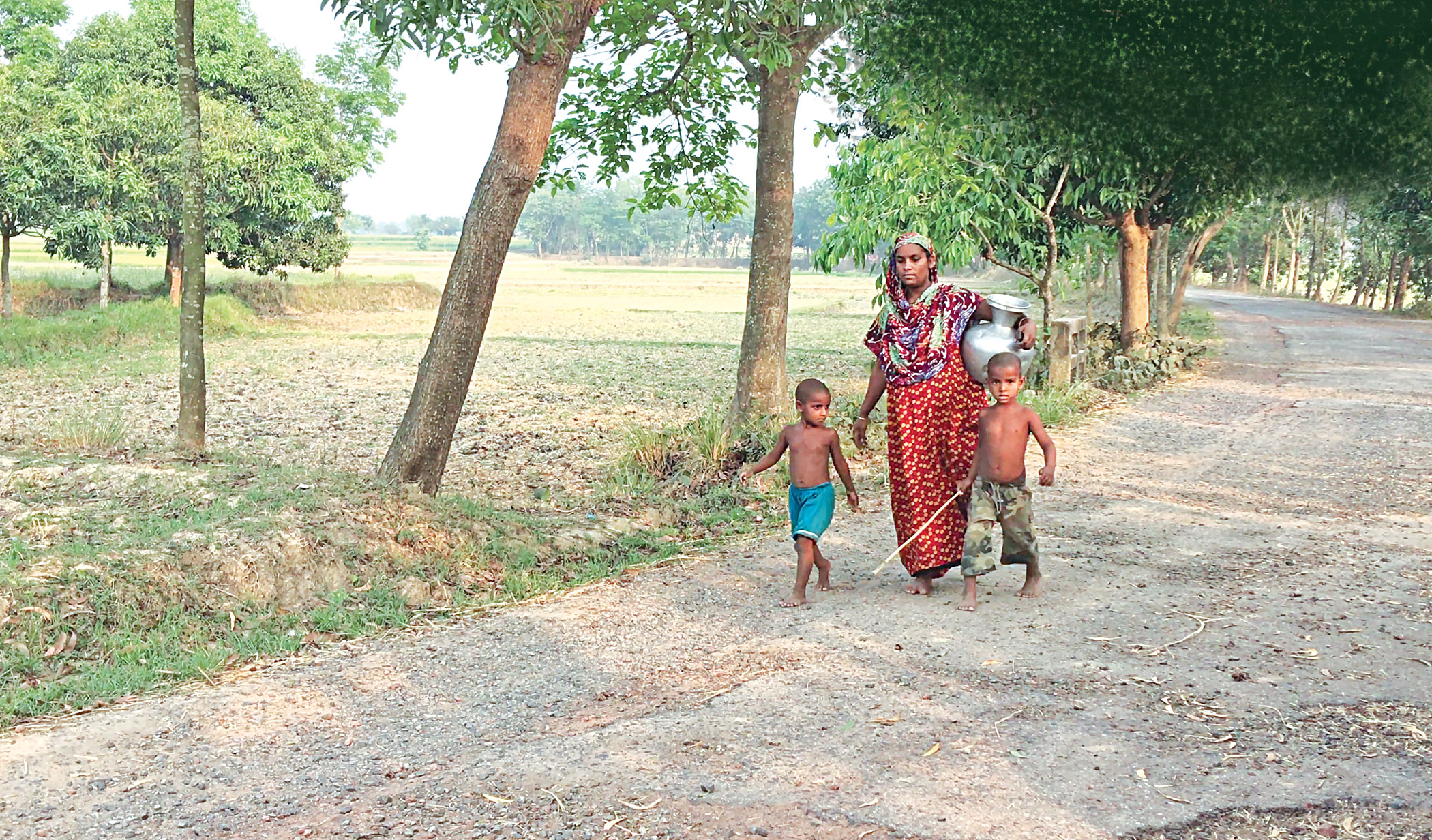
The story of Rajshahi is a cautionary tale for Bangladesh and, indeed, the rest of the world. It demonstrates that development models built on the intensive use of a single resource are perilously fragile in the face of climate change. Although the government is preparing guidelines to limit the use of water in the area, such reactionary measures will not do much to address the crisis in the long run. Therefore, the lesson for the delegates in Belém is that the agenda cannot be neatly divided into silos of "carbon reduction," "adaptation," and "finance." Rajshahi shows they are one and the same. Financing must be directed not just at clean energy, but at climate-resilient water management and agriculture. The silent killer of climate change does not announce itself with a cataclysm, but with a creeping drought, a falling water table, and the quiet despair of a farmer staring at his sterile field.
Comments