


Why can’t we stop illegal sand mining?

Illegal sand extraction has emerged as one of the gravest forms of environmental plunder in recent years, and recent reports reveal the sheer scale of this destructive trade. Along the Meghna River in Munshiganj Sadar upazila, politically backed groups—allegedly led by local BNP leaders—are operating outside their licensed zones, dredging sand perilously close to fertile farmlands. Despite repeated drives, fines, and arrests by the administration, and protests by farmers, the extraction continues unabated, accelerating erosion and swallowing tracts of the farmlands. According to a Prothom Alo report, the sand extractors are often getting tipped off before raids, which allows them time to move their machine from the unauthorised zone. This reflects deep-rooted collusion and a failure of governance.
 For all latest news, follow The Daily Star's Google News channel.
Similar patterns of environmental degradation, administrative inertia, and political protection have been reported from Narsingdi, Moulvibazar, Sylhet, Chandpur, and Rangpur in recent months. In Narsingdi's Raipura upazila, sand traders—who are allegedly part of an organised armed gang linked to politically influential groups—have turned the Meghna into their fiefdom, attacking villagers and even firing upon mobile court teams. In Moulvibazar, despite over 50 raids and Tk 17 crore worth of confiscated sand, the illegal extraction continues to devastate roads and riverbanks. These accounts reveal not isolated lawlessness but an entrenched and lucrative black economy sustained by political muscle and administrative compromise.
Riverbank erosion, habitat destruction, and waterway destabilisation are destroying ecosystems and livelihoods simultaneously. Farmlands once yielding multiple crops are vanishing, as seen in Munshiganj's Charmsura, where farmers have already lost significant portions of their ancestral land. The unregulated dredging also disrupts fish breeding cycles, thus violating ministry bans during the Hilsa spawning season. Such degradation not only undermines local food security but also erodes public trust in state institutions tasked with environmental protection.
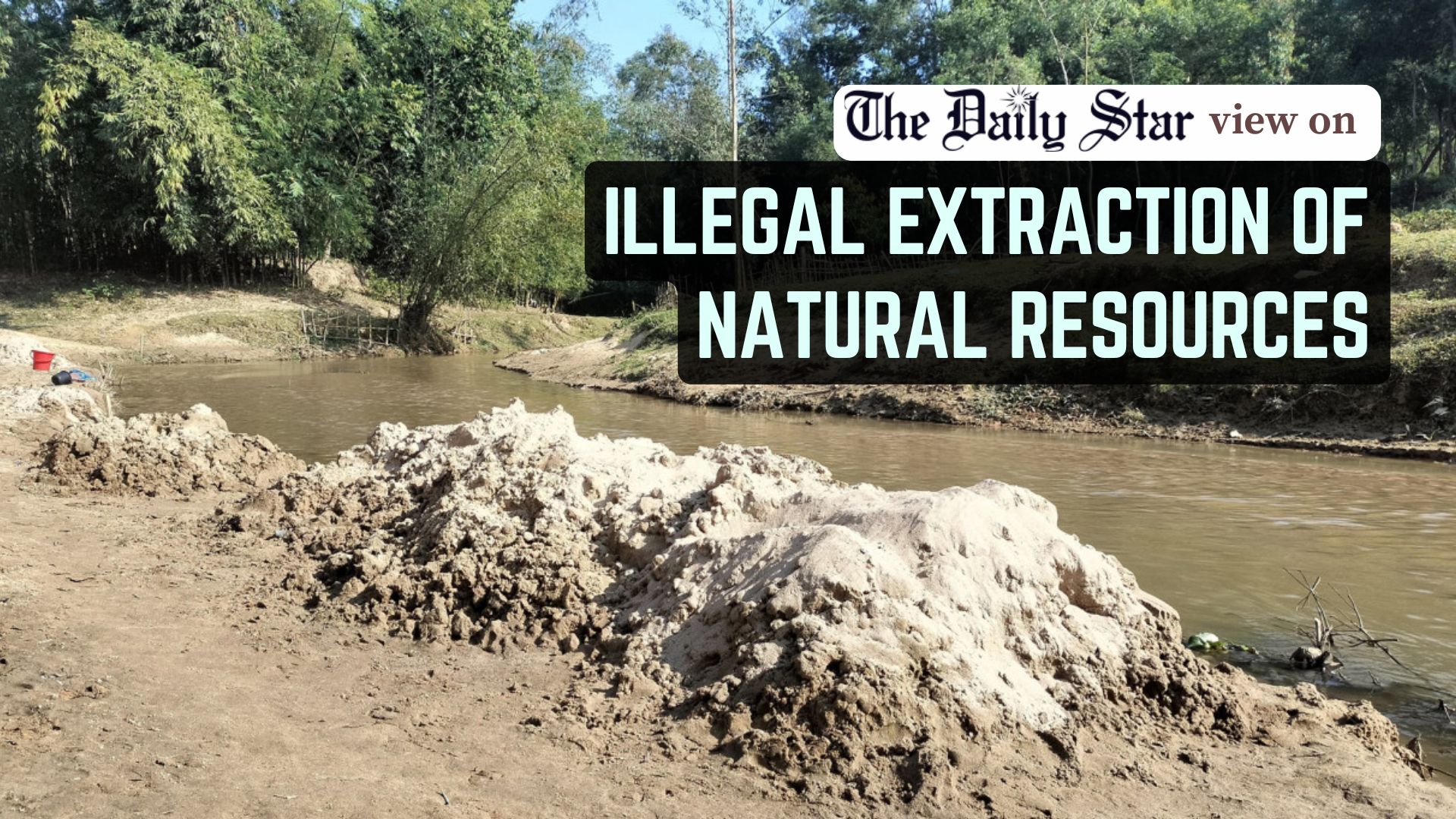
The persistence of these practices points to a crisis of enforcement. Local administrations cite budget constraints or lack of manpower, but these excuses have been given for many years. By now authorities should have solved these issues. In fact, accountability must begin with political will: leases should be revoked immediately upon violation, and administrative officers who fail to act decisively should face disciplinary measures. Transparent reporting and coordination among the land, fisheries, and environment ministries are equally essential. The government must dismantle the networks that protect these illegal operations, enforce strict penalties, and ensure that licensed extraction remains within legal and ecological limits.
Comments