


Are our schools inherently designed to fail?
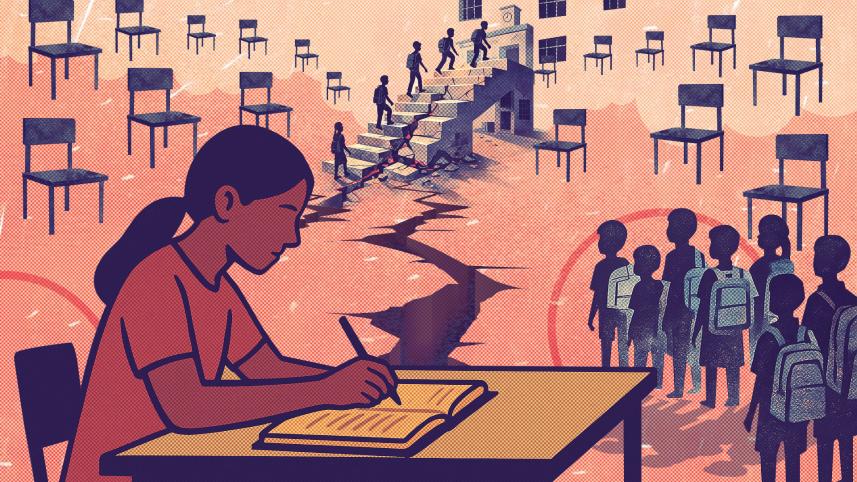
That our school education is in disarray is not news. It has been in public discussion, though it captures the media's attention whenever a new instance of its dysfunction is revealed. However, a way to address the problems and move towards better outcomes remains elusive.
The most recent Multiple Indicators Cluster Survey (MICS) by the Bangladesh Bureau of Statistics, with Unicef's support, has drawn public attention again to the woes of the secondary education system. According to MICS, only 44 percent of the secondary school-age children complete secondary education up to class ten. In other words, more than half of our young people do not have a secondary education, though 84 percent of children complete primary education. The report also shows income-based, gender-based and geographical disparities.
 For all latest news, follow The Daily Star's Google News channel.
 The statistics in the survey only mention children's participation in school, not what they learn or whether they acquire the knowledge and competence expected at primary and secondary level education.
That the majority of our young people are not earning a secondary education qualification and a large gap exists in children's education opportunities between primary and secondary stages, is shocking. However, it does not surprise education decision-makers and citizens, who are concerned about our children's education. If one were to probe a little into how the public school system runs—the policies and plans, financial investments and management, teachers' skills and professionalism, and the accountability of the actors—one might wonder whether the schools are actually designed to fail rather than run to achieve results.
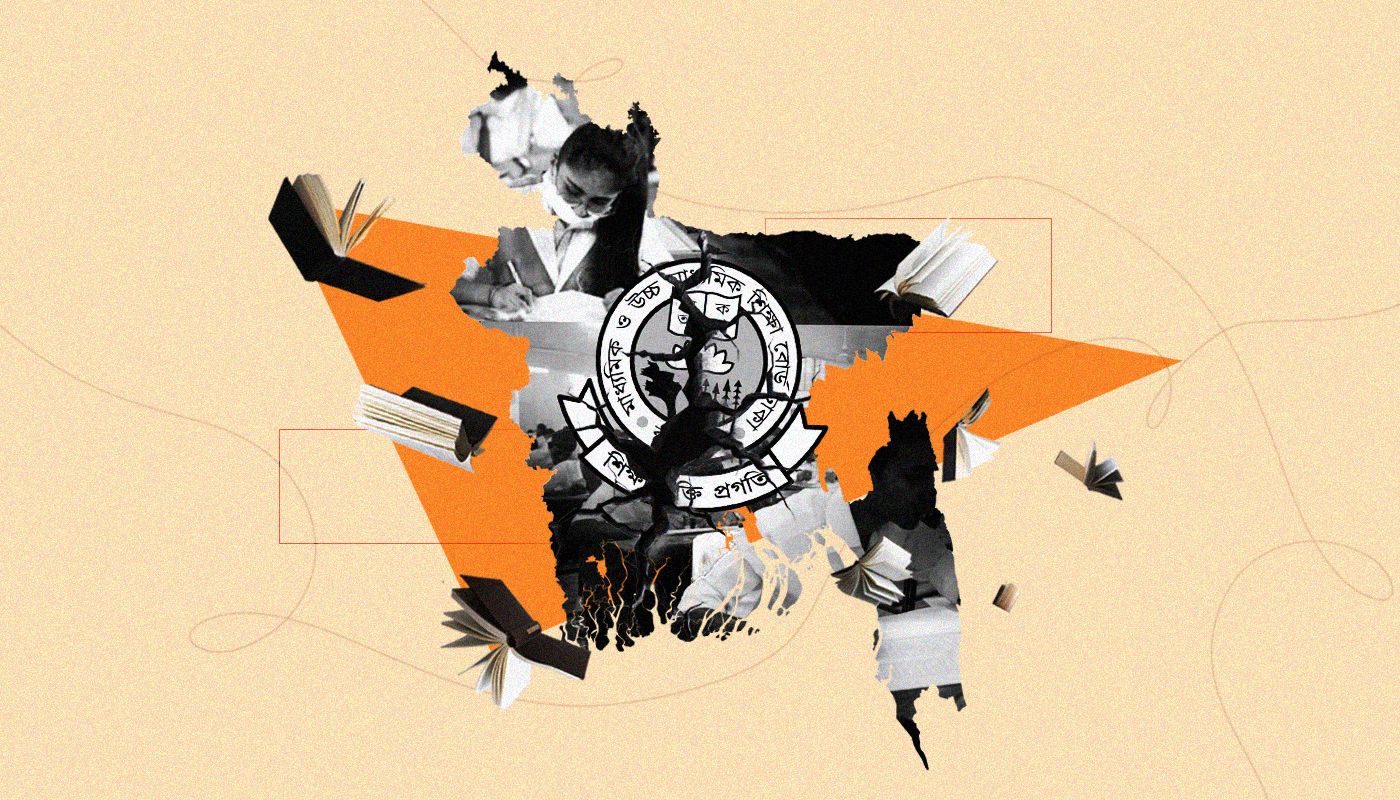
Let's look at a few facts that are already known but usually considered in isolation. When put together and holistically viewed, a damning pattern of a large mismatch is revealed between the stated goals and objectives of the school system and the ways, means and resources provided to achieve the outcomes.
The international goal for developing countries, according to the Sustainable Development Goals for education (SDG4), is to ensure equitable, inclusive and quality education up to secondary level for all children by 2030. Bangladesh has pledged its support to this goal, but has no plan or programme with a time frame and strategy prepared for this purpose. Nevertheless, the primary level, despite its many shortcomings, has a compulsory education law and an implementation plan. This situation explains the major gap in student participation between primary and secondary education.
The absence of a public obligation to provide quality secondary education to children has led to haphazard and incoherent policies and management of secondary education. At the primary level, 98 percent of children enrol in school and the government is committed to providing a government school in every community. The secondary gross enrolment rate is about 70 percent, of whom over one-third drop out before completing SSC (adding up to over half of the young people not having secondary education as reported in the survey). Of about 20,000 secondary schools and institutions, only 628 are fully supported by the government; 97 percent of secondary schools receive government support through a subvention for the basic salary of a set number of teachers. This is widely considered to be inadequate both in terms of the financial resources available to schools and the number and quality of teachers they require. There are chronic shortages of qualified subject teachers for English, math, science, computer science and even Bangla.
Besides, there are disparities and discrimination in the distribution of schools and provisions for support between urban and rural areas. Remote areas, such as coastal and hill locations, haors and chars, are particularly at a disadvantage in receiving government support and attracting teaching personnel.
Schools cannot perform without a sufficient number of teachers with the necessary professional skills. The "staffing plan" applied for government salary subvention (known as MPO) to schools is mostly inadequate for the number of students and subjects. Even then, there are very often significant vacancies in teaching positions. Even government schools have 20 percent vacancies. The government staffing plan provides for 53 teaching positions in a collegiate school in the capital with 2000 students, but only 39 teachers were working at the school in September this year.
School management suffers due to the absence of a headmaster or an assistant headmaster's leadership. The Bangladesh Bureau of Educational Information and Statistics (BANBEIS) reported that in 2023, out of 628 government secondary schools, only 352 had a headmaster (schools recently brought under government have no formal headmaster's position yet). A large number of headmaster positions remain vacant. Bureaucratic inertia and a weak sense of responsibility are evident in this and other instances.
Besides, teachers do not have a career path; most start as assistant teachers and retire from the same position. A senior teacher category was created in 2018, but few were promoted to that post, and it has stopped entirely since 2021. This is hardly a formula for attracting talented people to teaching and encouraging them to perform.

The Education Watch 2023 report indicates that three-fourths of the students, both in cities and villages, go to private tutors and coaching centres and 93 percent rely on commercial guidebooks to prepare for their exams. This shows students cannot depend on classroom teaching, but more importantly, it adds hugely to the family's expenses. School education has been turned into a commodity; only those who can pay can claim it.
The rough picture presented here indicates how the basic conditions necessary for a school to perform are lacking. We have not even mentioned other concerns, such as the design and plan of the curriculum and the learning content, and the need to translate the curriculum into classroom learning activities. We have also not discussed the objectives of education: defining the subjective and objective aims and skills and competencies that learners must acquire and how these are measured and assessed. Furthermore, there are infrastructure and physical learning environment problems. All these add to the layers of complexity and problems that the education system has to address.
This disarray has not arisen suddenly. It has been in the making for a long time, primarily from neglect by the country's political system and power structure. The interim government also appears to have shied away from embarking on an education reform initiative, which it tried to take in several other areas. Belatedly, the Ministry of Education has appointed a 10-member consultative committee (headed by this writer), giving it the task to "examine prevailing teaching-learning, training and capacity-building, research and management structure in secondary education; consult with various stakeholders; and present necessary recommendations for improving the quality and standard of teaching-learning and management in secondary education." A time frame of three months has been set for this task.
A similar consultative committee was formed last November by the Ministry of Primary and Mass Education. Its 200-page report with 100-plus recommendations under eight main categories was submitted to the government in February this year.
The Secondary Education Consultative Committee has begun its work in earnest. It expects to undertake the analysis and stakeholder consultation and prepare its recommendations within the given time frame. The committee is working on the premise that its recommendations will help set the agenda for action for the elected government that will emerge following the upcoming referendum and parliamentary election. It also hopes that the legacy of past governments' neglect will not continue.
Dr Manzoor Ahmed is professor emeritus at BRAC University, chair of Bangladesh ECD Network (BEN), and adviser to the Campaign for Popular Education (CAMPE). Views expressed in this article are the author's own.
Views expressed in this article are the author's own.
Follow The Daily Star Opinion on Facebook for the latest opinions, commentaries, and analyses by experts and professionals. To contribute your article or letter to The Daily Star Opinion, see our guidelines for submission.
Comments