


How reducing dwell time can improve Chittagong Port’s efficiency

In 2003, I had the privilege of spending 55 days in Japan under a Japan International Cooperation Agency (JICA)–sponsored Group Training Course on Container Terminal Development in Tokyo and Yokohama. We visited several container terminals and logistics hubs, including the Nippon Express Bonded Warehouse, where I first encountered Japan's remarkable Hozei Area System. It was an eye-opener. Importers could immediately move cargo from full-container-load (FCL) units—where all the goods belong to one sender—into bonded warehouses under customs supervision. Inside those warehouses, they could unpack, repack, or store goods duty-free until clearance. This system freed up containers almost instantly and kept Japan's ports moving.
That single mechanism—reducing container dwell time—was at the heart of Japan's logistics miracle. Through this, ports achieved faster vessel turnaround, higher yard capacity, and far lower storage costs, proving that efficient container flow is the most powerful multiplier of port productivity and trade competitiveness.
 For all latest news, follow The Daily Star's Google News channel.
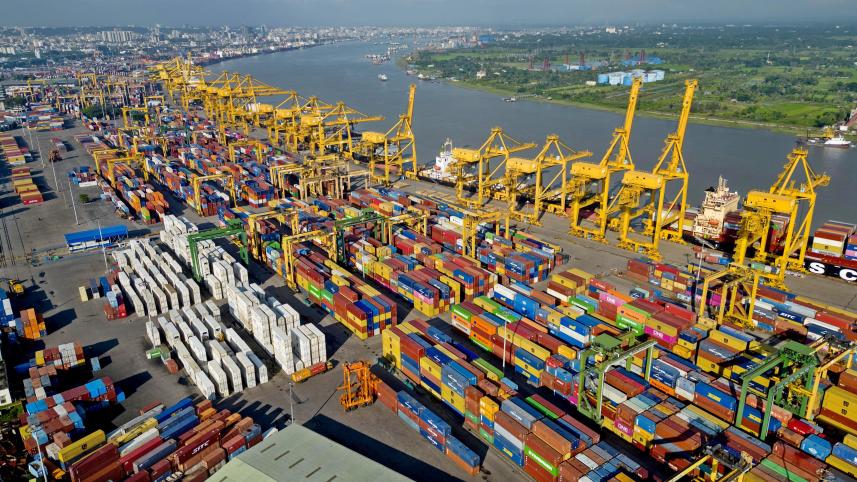
Bangladesh, however, faces the opposite reality. At Chittagong Port, our nation's busiest maritime gateway, FCL imports sit idle for an average of more than 11 days before clearance. Each of those days comes at a painful cost: demurrage to shipping lines, port storage fees, and detention charges that drain foreign exchange. Industry estimates suggest importers lose billions of dollars annually, which could otherwise be fuelling growth, investment, and jobs.
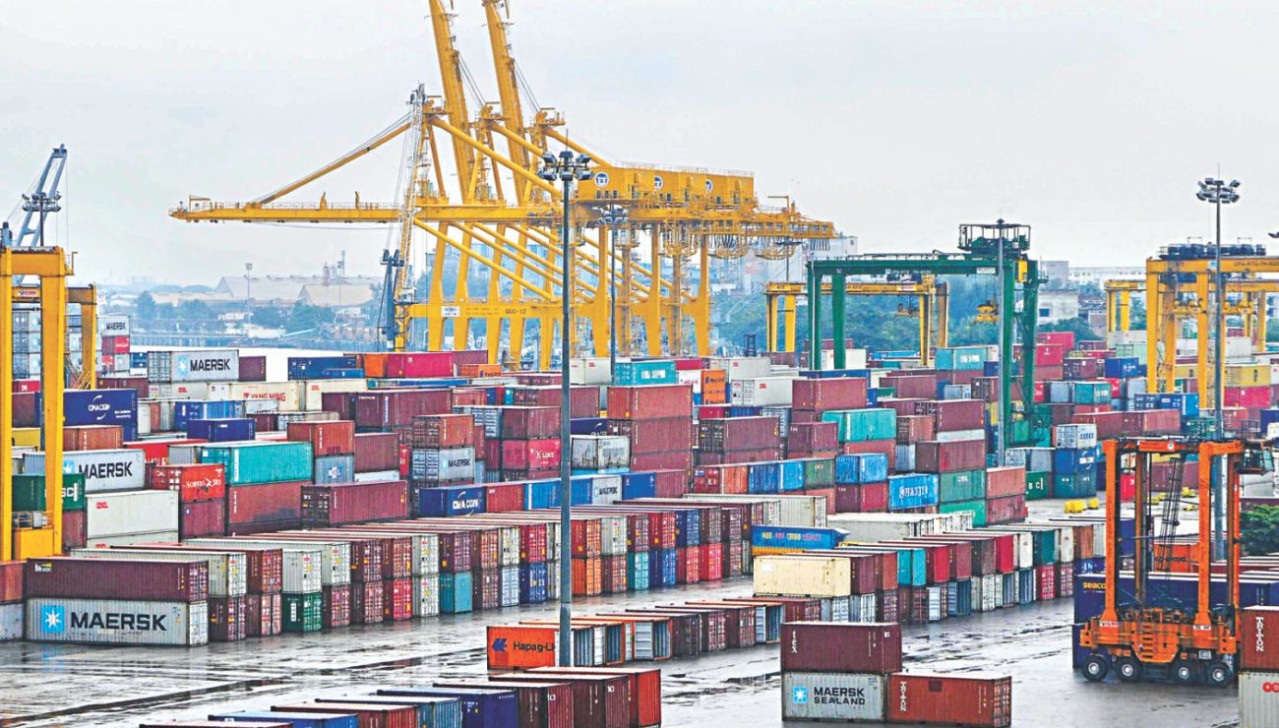
The issue is not one of capacity but of efficiency. Terminals are designed for throughput, not storage. Yet in Bangladesh, containers linger for weeks, turning our terminals into parking lots. Yard space that should hold transit containers instead holds uncleared imports. As a result, vessels queue offshore, berth schedules slip, and shipping lines grow increasingly frustrated with the port's sluggish turnaround. Their vessels lose time and money waiting for berths, their containers remain trapped beyond free days, and their operational schedules fall into disarray. Many carriers now consider Bangladesh a "slow port"—a costly label that discourages service expansion and investment. Every day of delay reverberates through freight rates and supply chains, hurting importers, exporters, and ultimately consumers.
Reducing dwell time, therefore, should be a national economic strategy. Every day saved increases a port's effective capacity without adding a single square metre of land. If the average dwell time at Chittagong Port could be reduced from 11 days to 4, my estimation shows that total container handling capacity could rise by more than 60 percent, instantly easing congestion and accelerating trade.
Japan's Hozei system offers a tested blueprint. Private operators such as Nippon Express and Kintetsu World Express manage bonded warehouses licensed by customs, where containers move out of terminals within hours of unloading. Goods can stay duty-free for up to three years, and importers pay taxes only upon release. Customs retains full digital oversight—control without congestion.
Other nations have embraced similar reforms with remarkable success. Indonesia's Bonded Logistics Centers (PLB) cut port dwell time from 6.4 to 2.9 days within two years. India's 2019 bonded warehousing framework transformed throughput at Jawaharlal Nehru Port. Vietnam and Malaysia have integrated bonded logistics zones with customs automation, keeping their ports fluid and globally competitive. The pattern is clear: when cargo moves freely under supervision, the economy breathes freely too.
Bangladesh has taken baby steps by allowing limited commodity transfers to Inland Container Depots (ICDs), but the scope remains tiny. Most imports still clear inside the port, clogging its arteries. Terminal cranes stand idle not for lack of cargo but for lack of space. The problem is systemic—it lies in how our logistics architecture is built and governed.
The proposed National Logistics Policy is a golden opportunity to fix this. But it must go beyond vision statements. Bonded warehouse development must become a cornerstone policy priority, supported by the National Board of Revenue (NBR) and customs, not resisted by them. These agencies must modernise their supervision tools to enable off-dock clearance, rather than monopolising clearance within the port fence.
To drive this transformation, the Chief Adviser's Office, Bangladesh Investment Development Authority, and the Public-Private Partnership Authority should jointly champion bonded-logistics zones around Chattogram, Dhaka, and Mongla. NGOs such as Business Initiative Leading Development (BUILD) and the private sector can partner under PPP models to develop modern warehouses integrated with digital customs interfaces. Such collaboration would free up container yards, speed up vessel operations, and dramatically improve Bangladesh's trade ranking.
Port management efficiency is not just about equipment or infrastructure—it is about flow. When containers sit for weeks, the entire system slows, regardless of investment. That is why dwell time is the single most accurate metric of port health. The shorter it is, the stronger the economy.
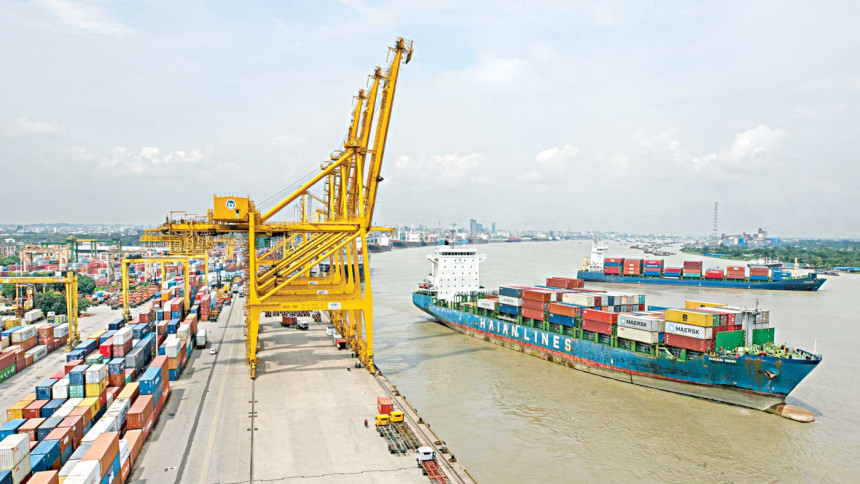
Bangladesh cannot attract world-class terminal operators or shipping alliances unless it ensures smooth cargo flow. Long idling containers are a nightmare for carriers; they lose box rotations, revenue, and schedule integrity. The current system imposes invisible penalties that damage our reputation. To restore confidence, Chittagong Port must transition from a storage-based model to a movement-based one—where bonded warehouses take the pressure off the terminals and customs supervises through data, not detention.
It is time for policymakers, think tanks, and business leaders to unite. Research orginations and think tanks must elevate this issue to the top of the reform agenda. The Chief Adviser's Office should ensure that NBR and customs align with national interests—not institutional inertia.
Bangladesh stands at a crossroads. If we act now, embracing bonded logistics as Japan did with its Hozei system, we can unlock our ports and transform our economy. But if we delay, our growth will remain trapped behind port gates. The choice is ours—to remain boxed in bureaucracy or to free the boxes and free the economy.
Ahamedul Karim Chowdhury is adjunct faculty at Bangladesh Maritime University, and former head of inland container depot at Kamalapur and Pangaon Inland Container Terminal under Chittagong Port Authority.
Views expressed in this article are the author's own.
Follow The Daily Star Opinion on Facebook for the latest opinions, commentaries and analyses by experts and professionals. To contribute your article or letter to The Daily Star Opinion, see our guidelines for submission.
Comments